The National Film and Sound Archive

The Library

A whimsical window into Australia’s audiovisual memories, with an interactive platform revealing the stories behind each object.
For
Our goal was to create a platform that feels like a magical artefact in itself, blending with the exhibition’s atmospheric design and elevating the digital object label beyond what visitors usually expect.
Matt Smith
Creative Director
Distil
Background

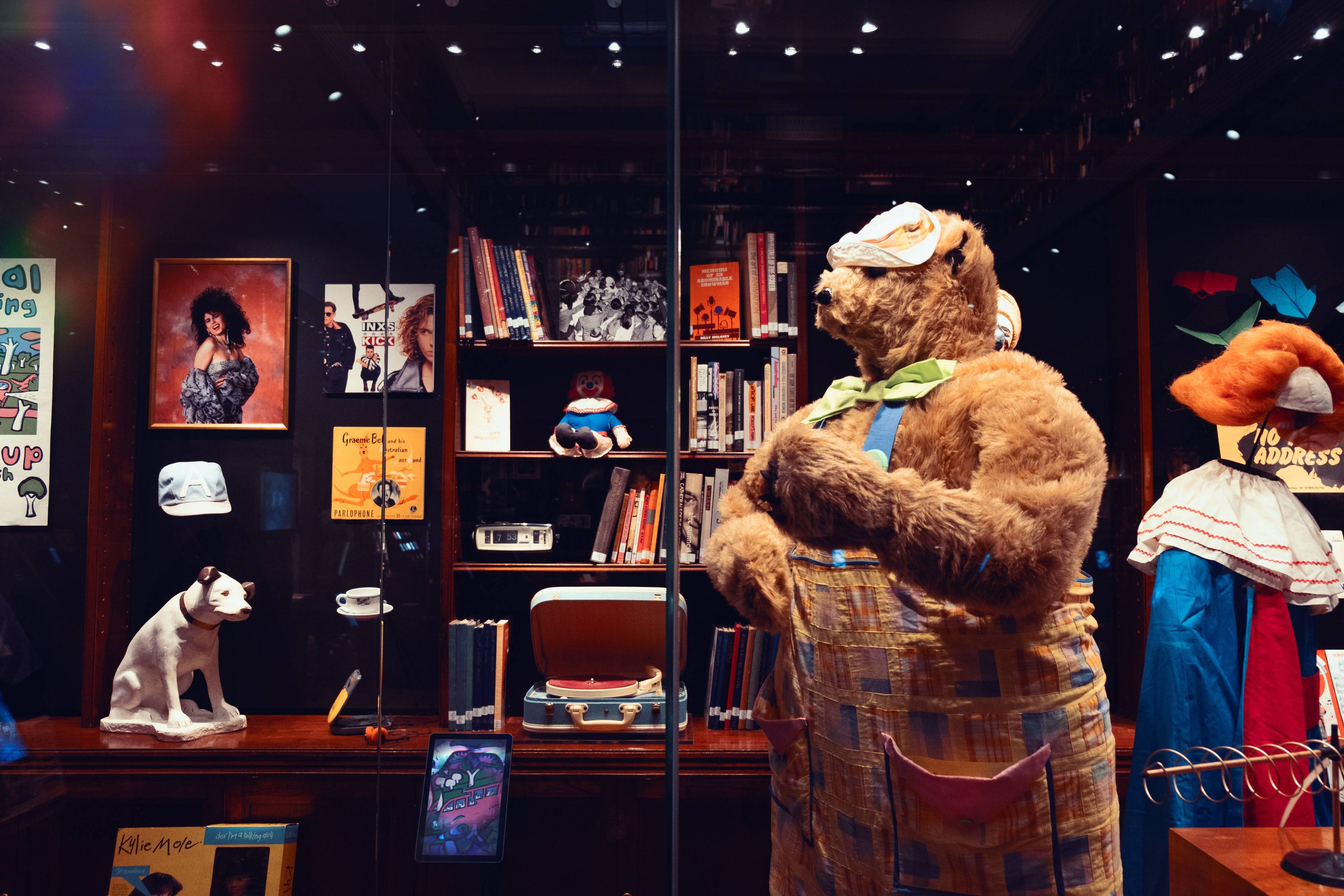
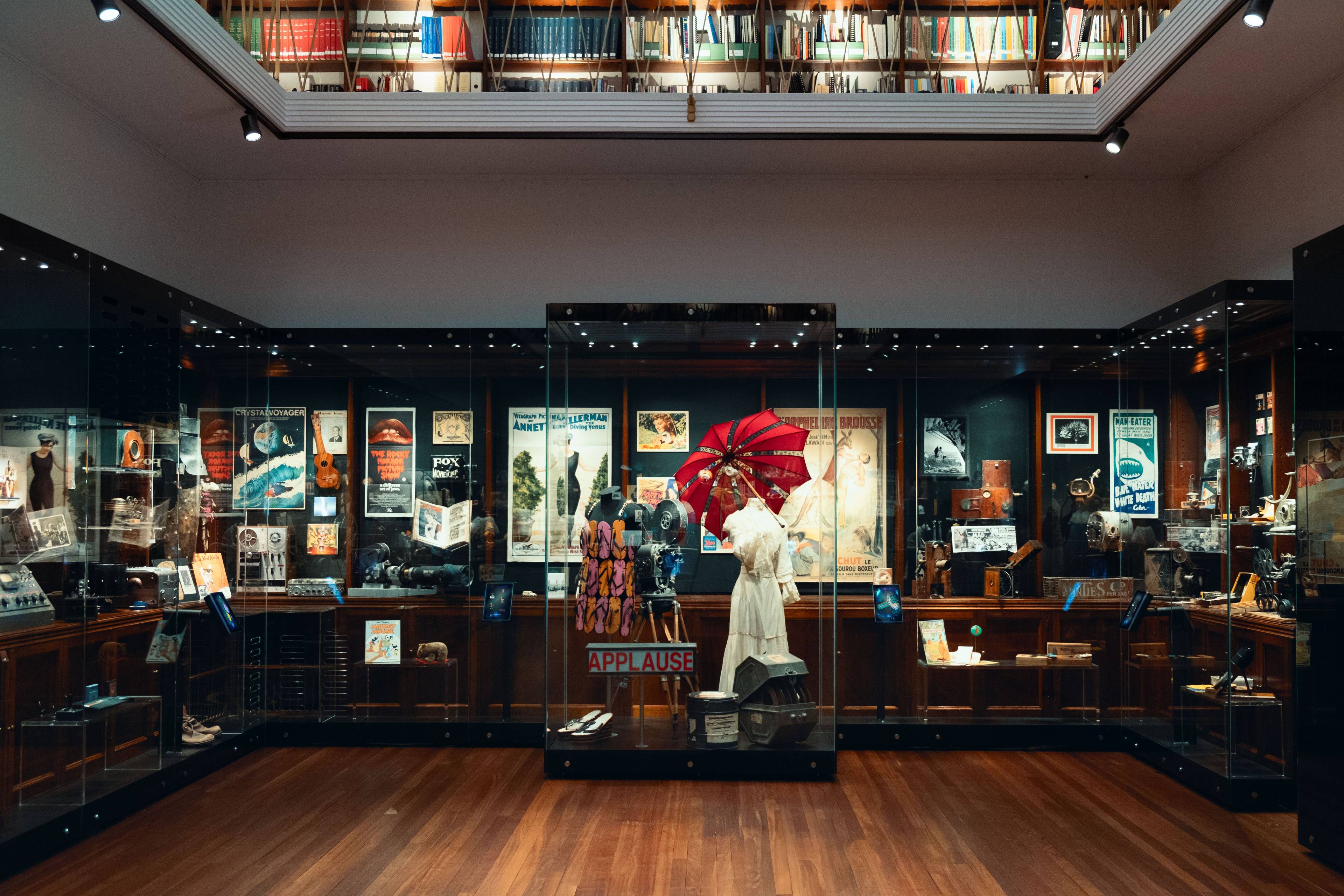
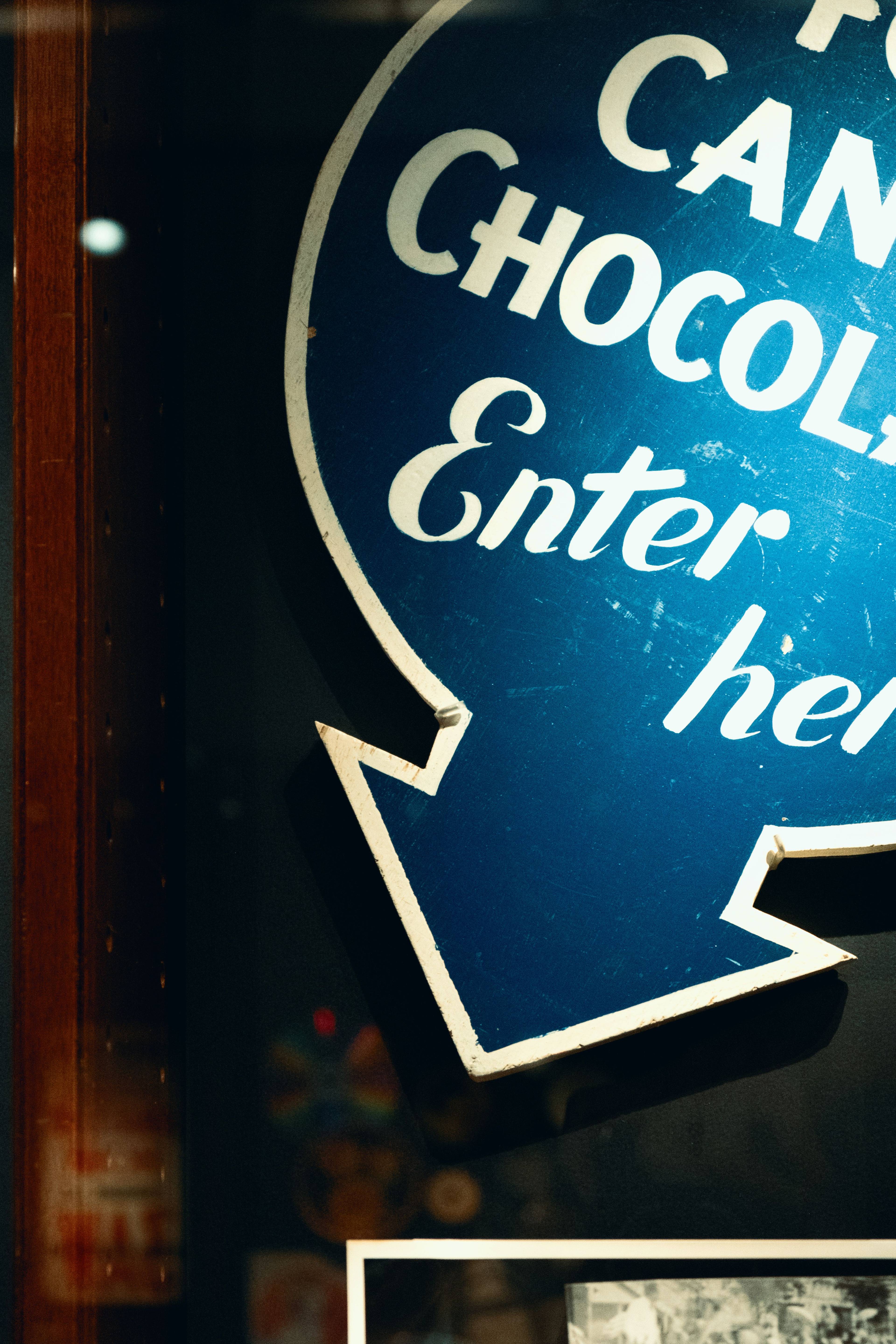
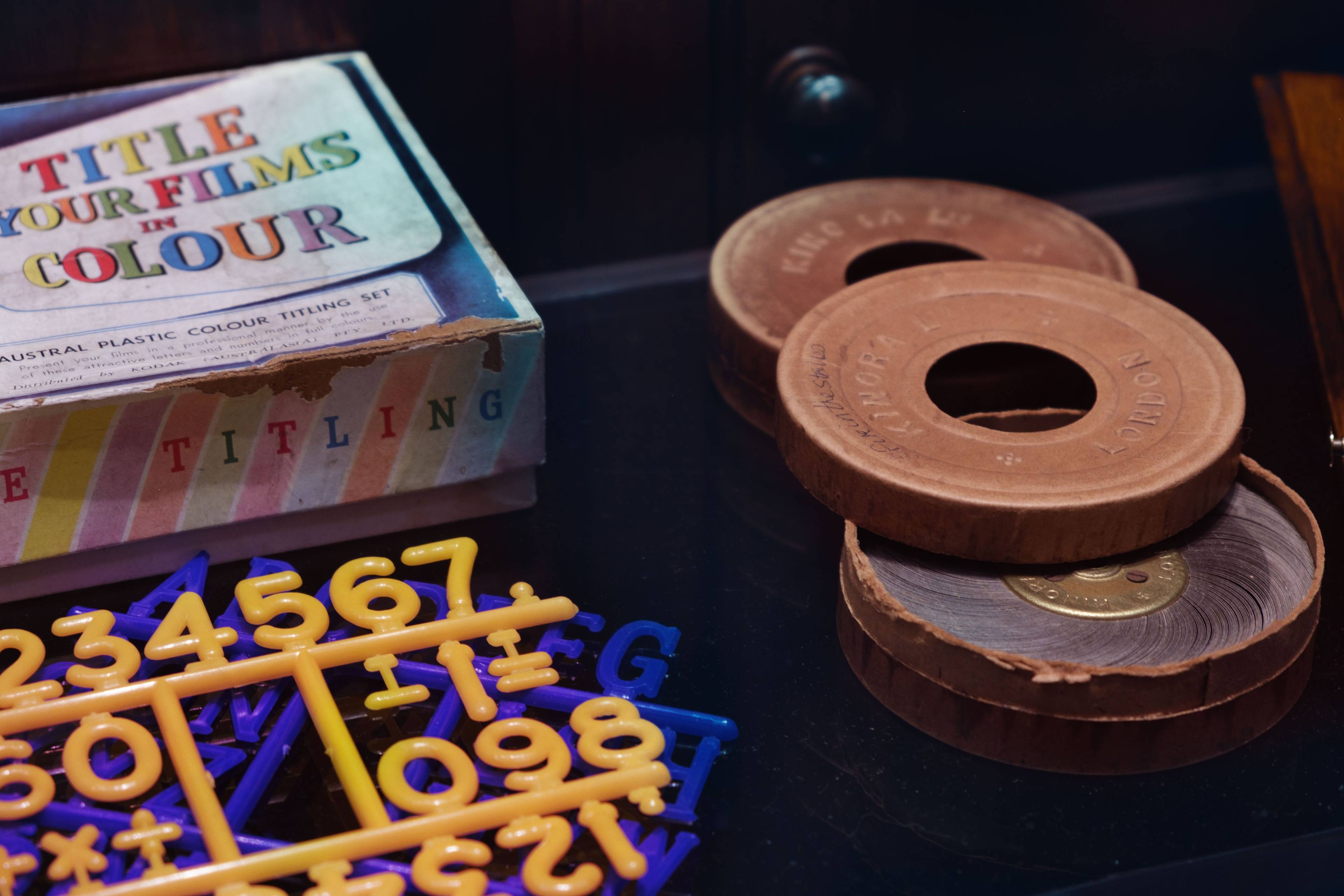
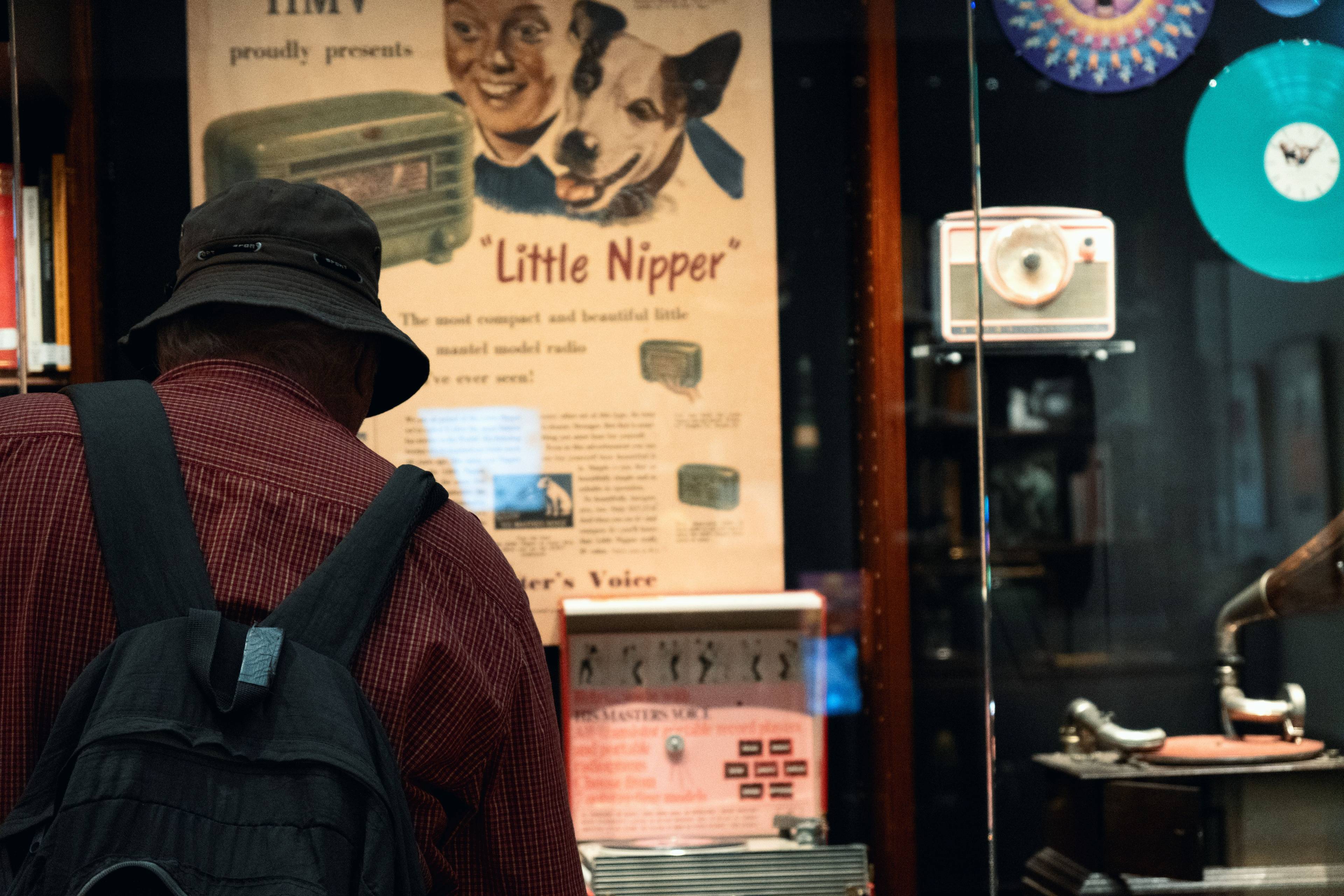
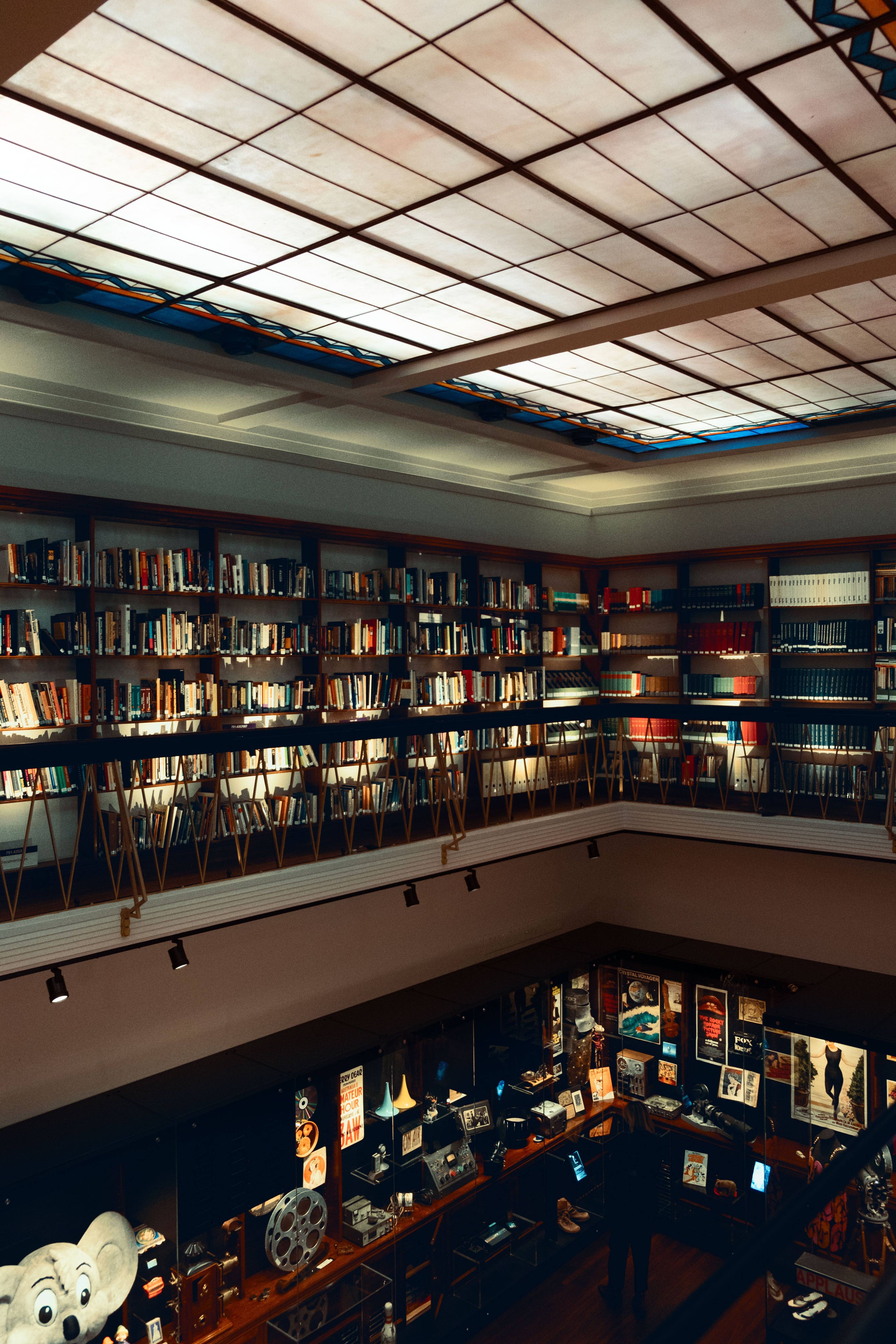
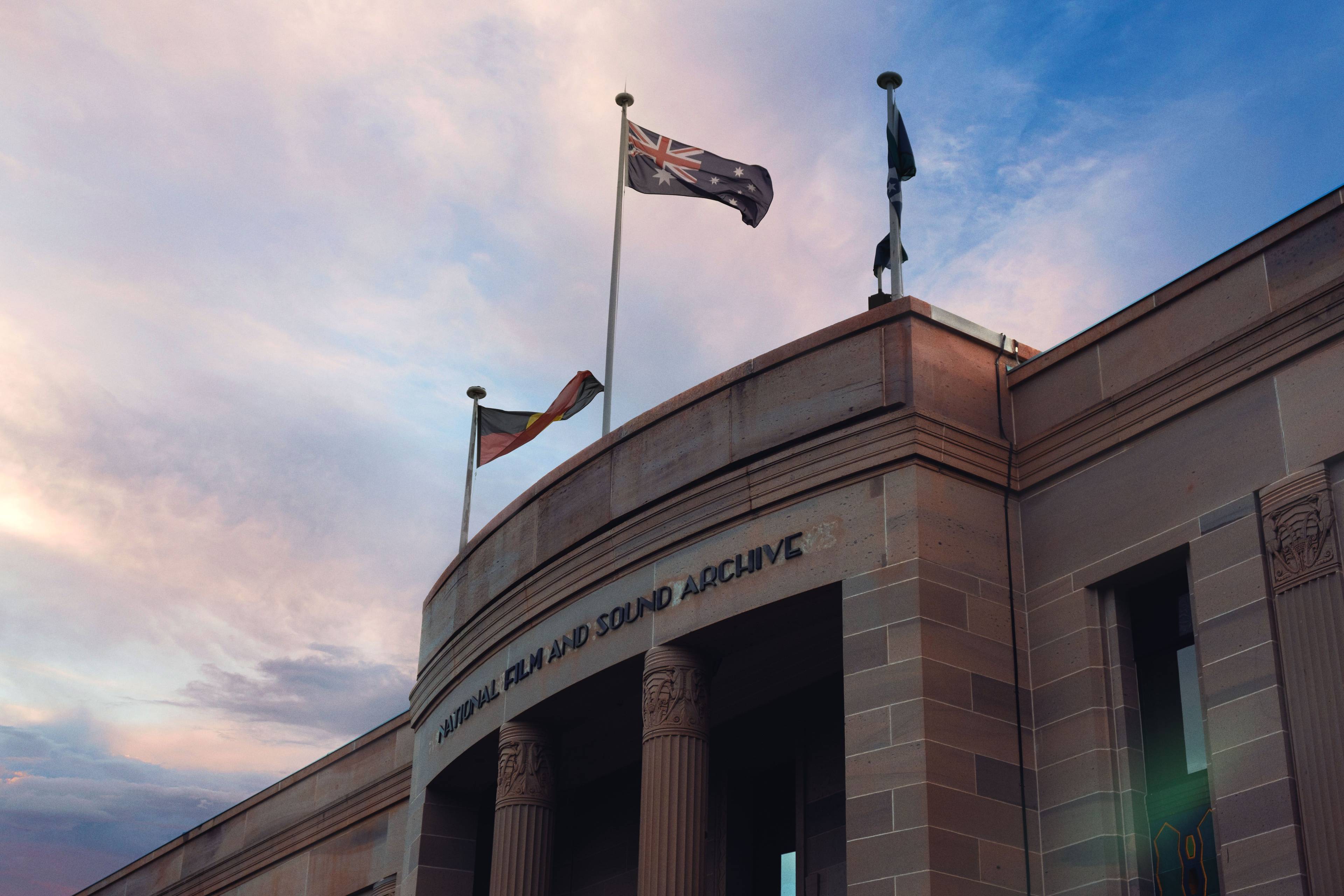
The Library at the National Film and Sound Archive of Australia is a permanent exhibition housing more than 280 artefacts across film, television and sound, interwoven with an interactive layer of touchscreens that form part of the whimsical cabinet-of-curiosities design.

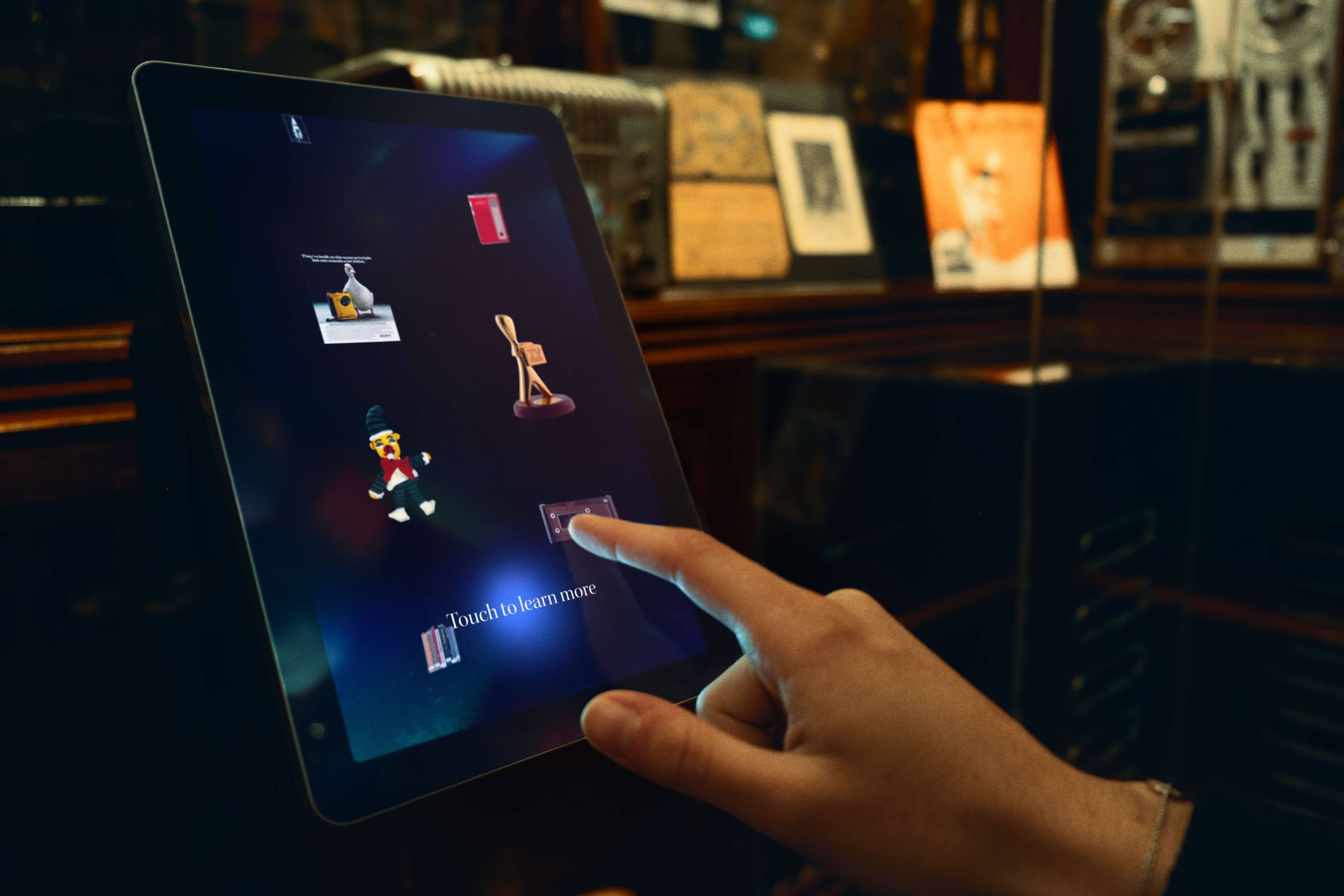
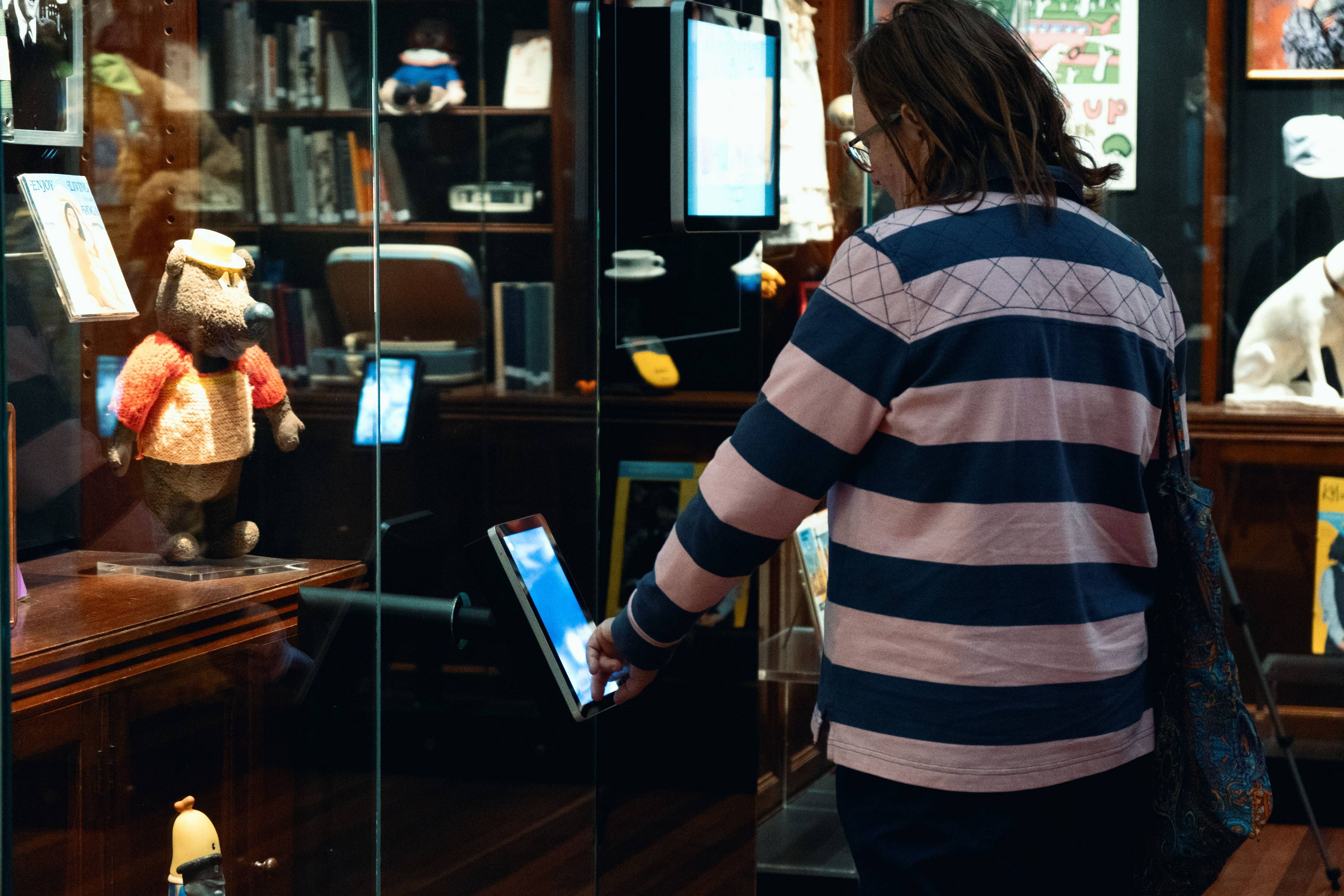
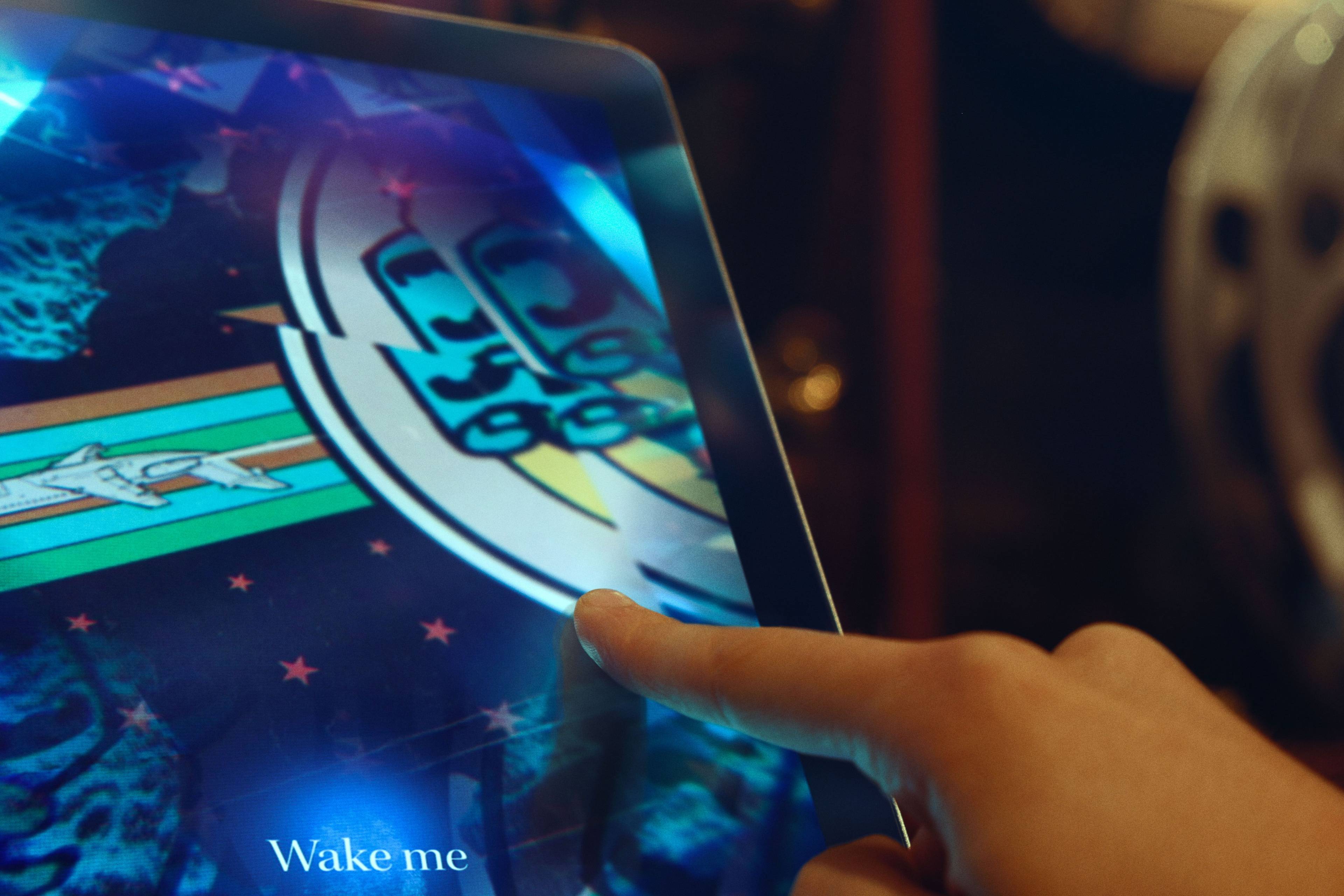
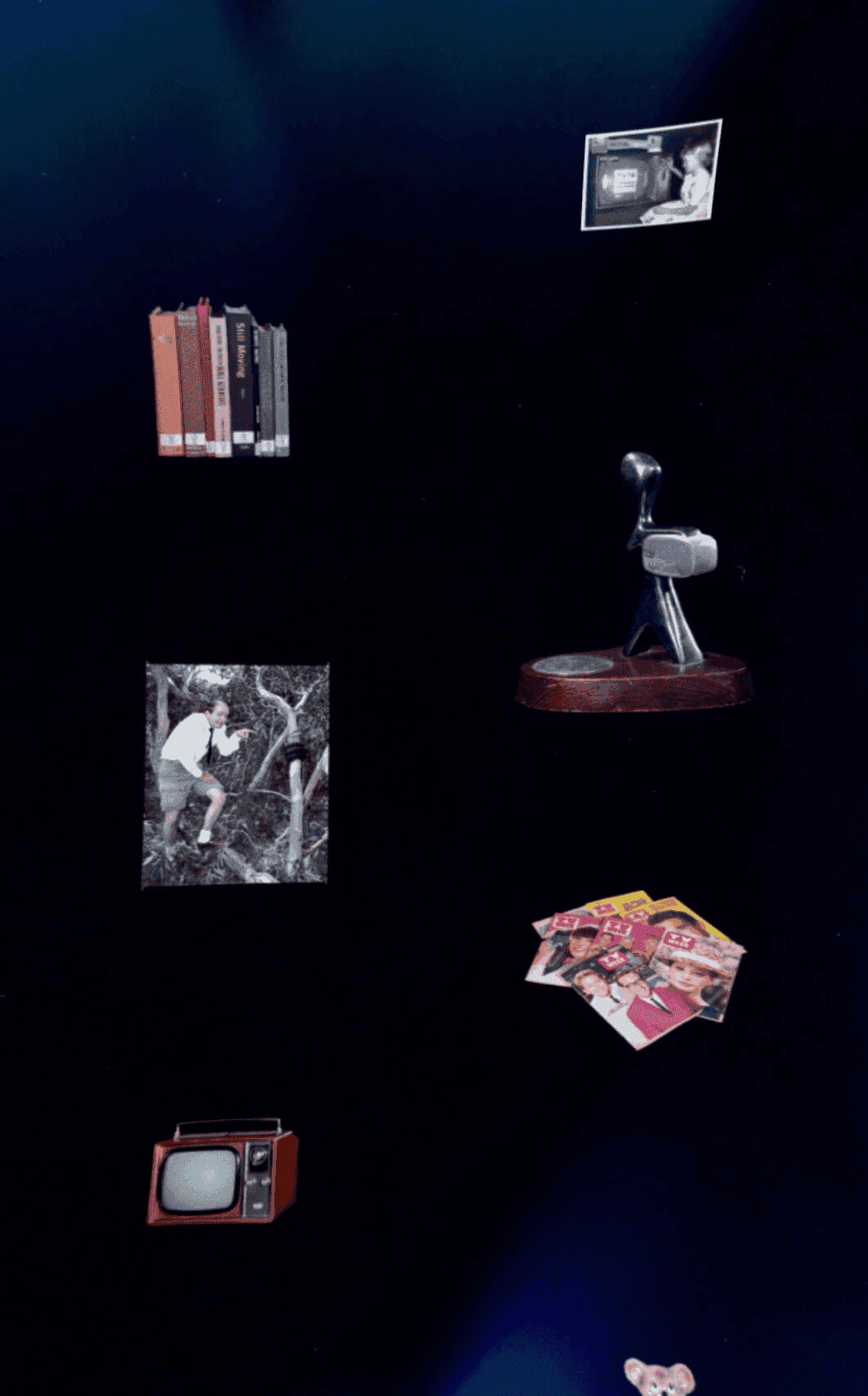
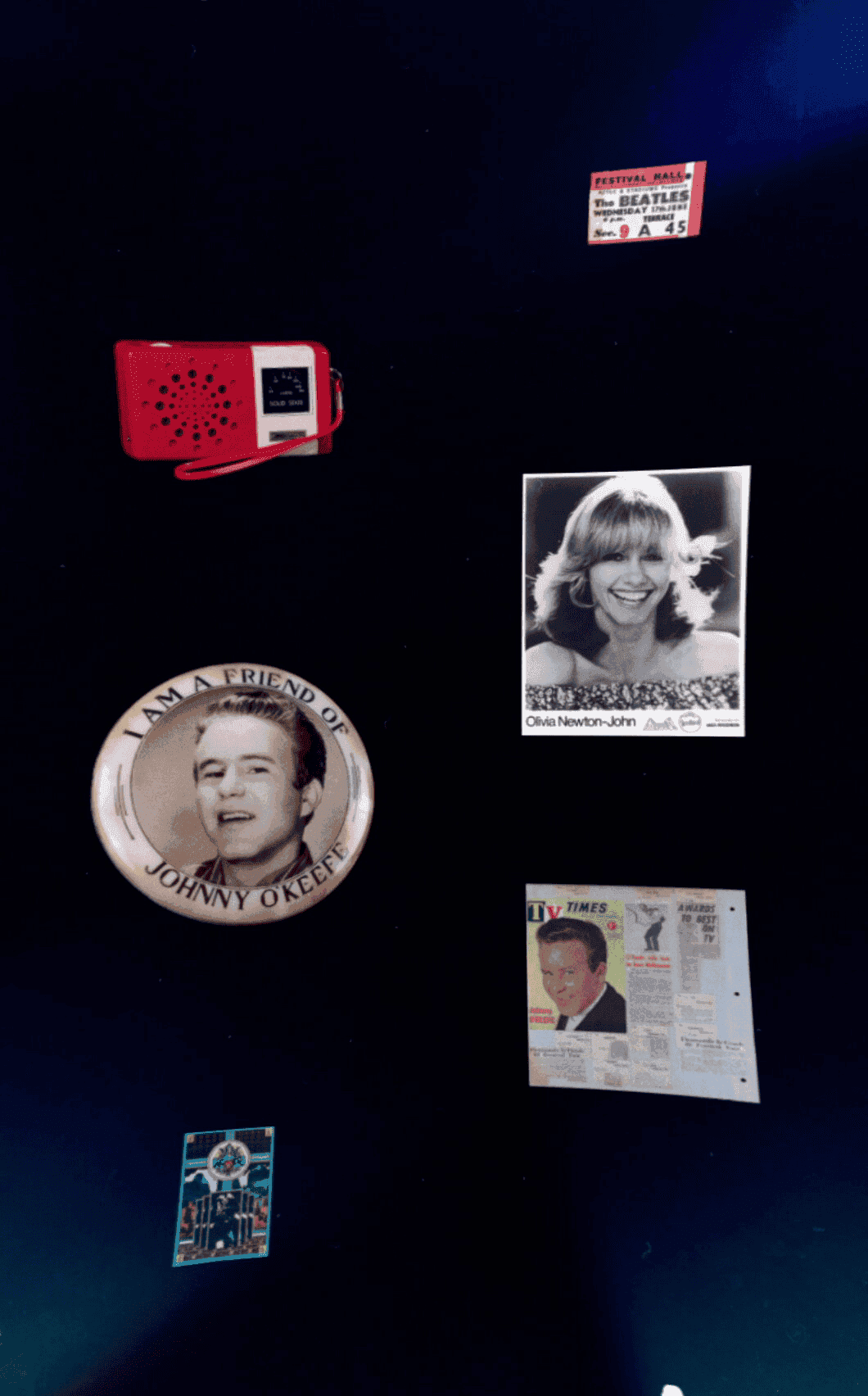
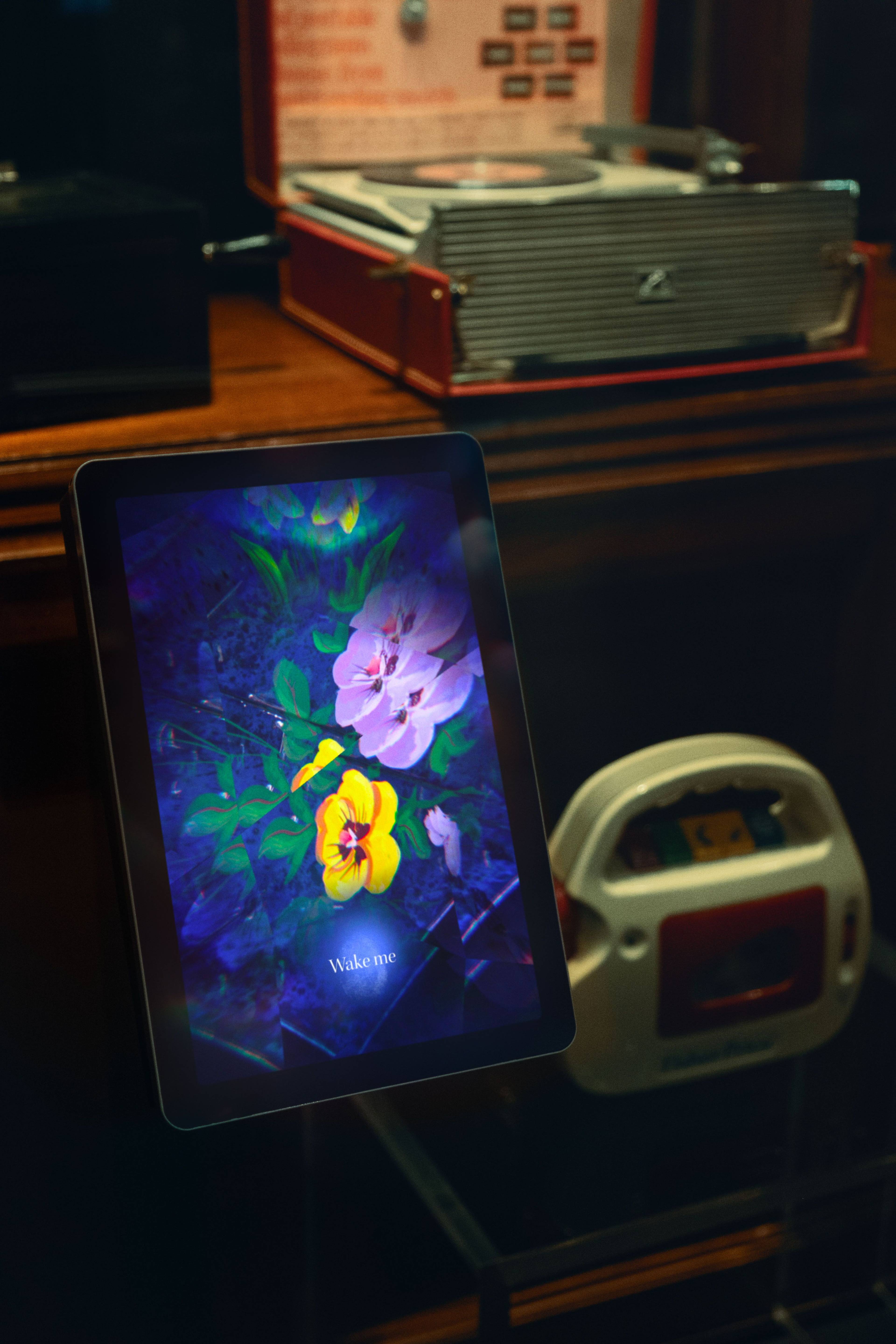
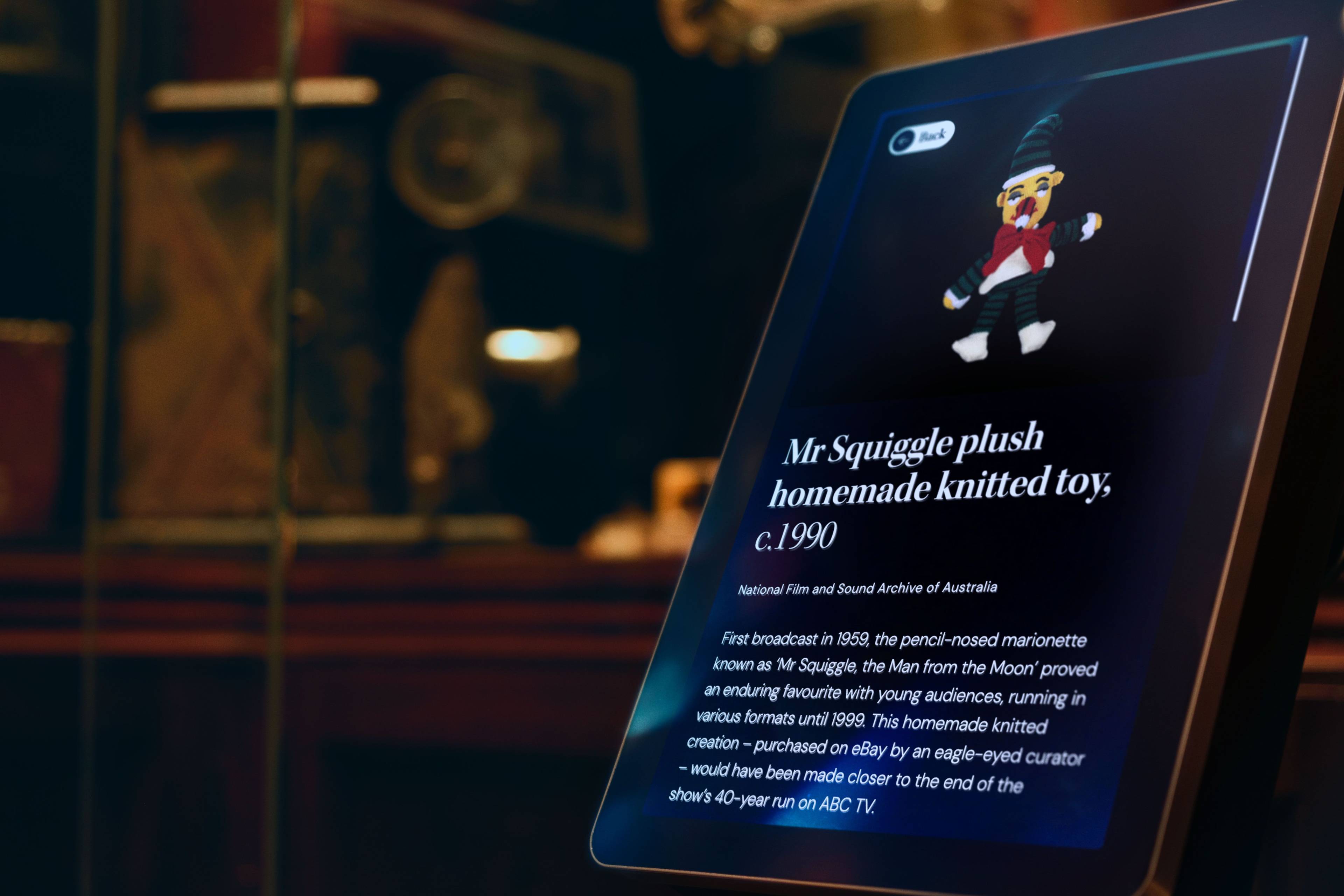
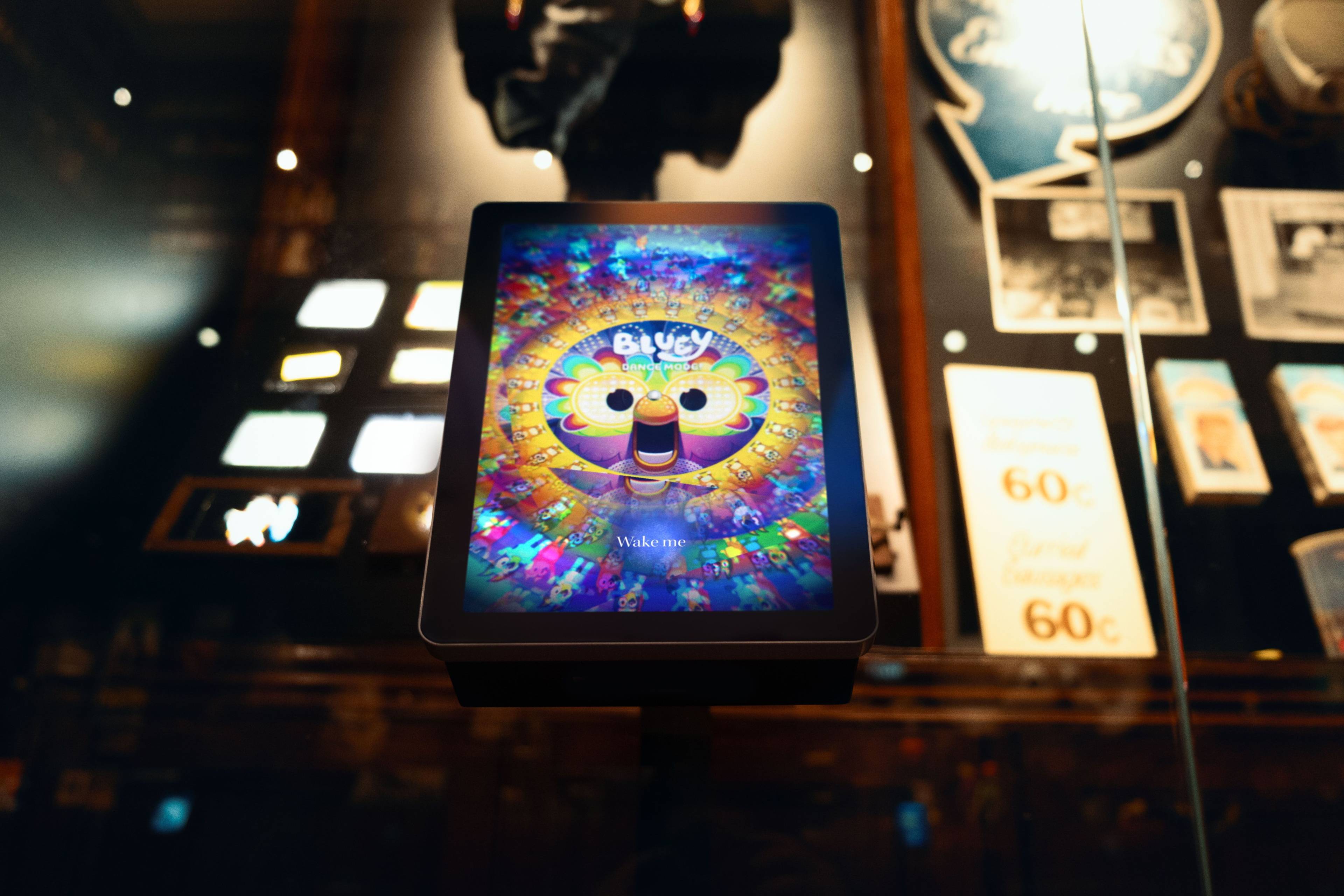
Within the meticulously restored art deco interior, and amid a dense array of objects, the screens consolidate curatorial interpretation in place of individual object labels. They allow visitors to seek context for each artefact while, through their own design, creating a dreamy atmosphere that complements the exhibition.
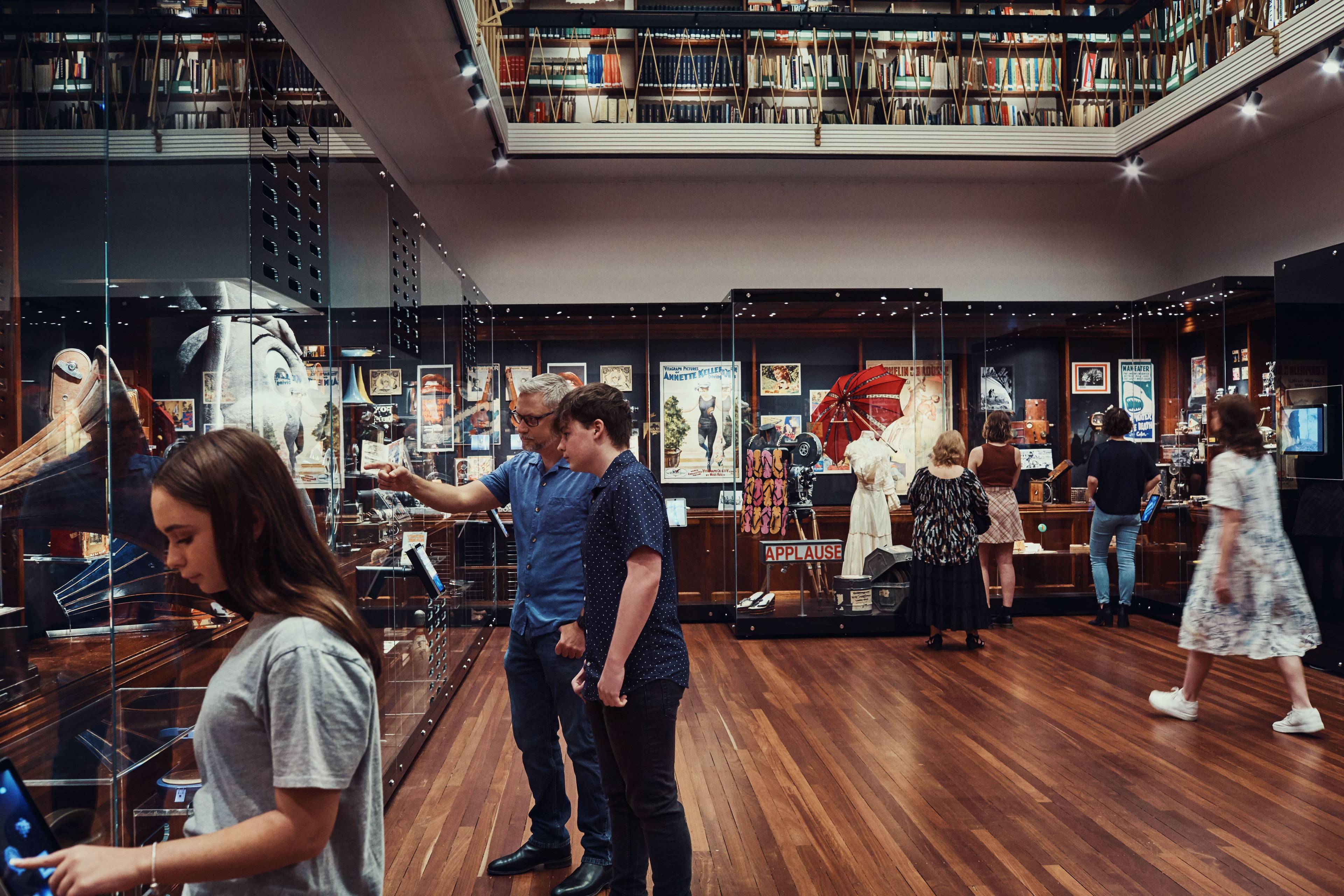
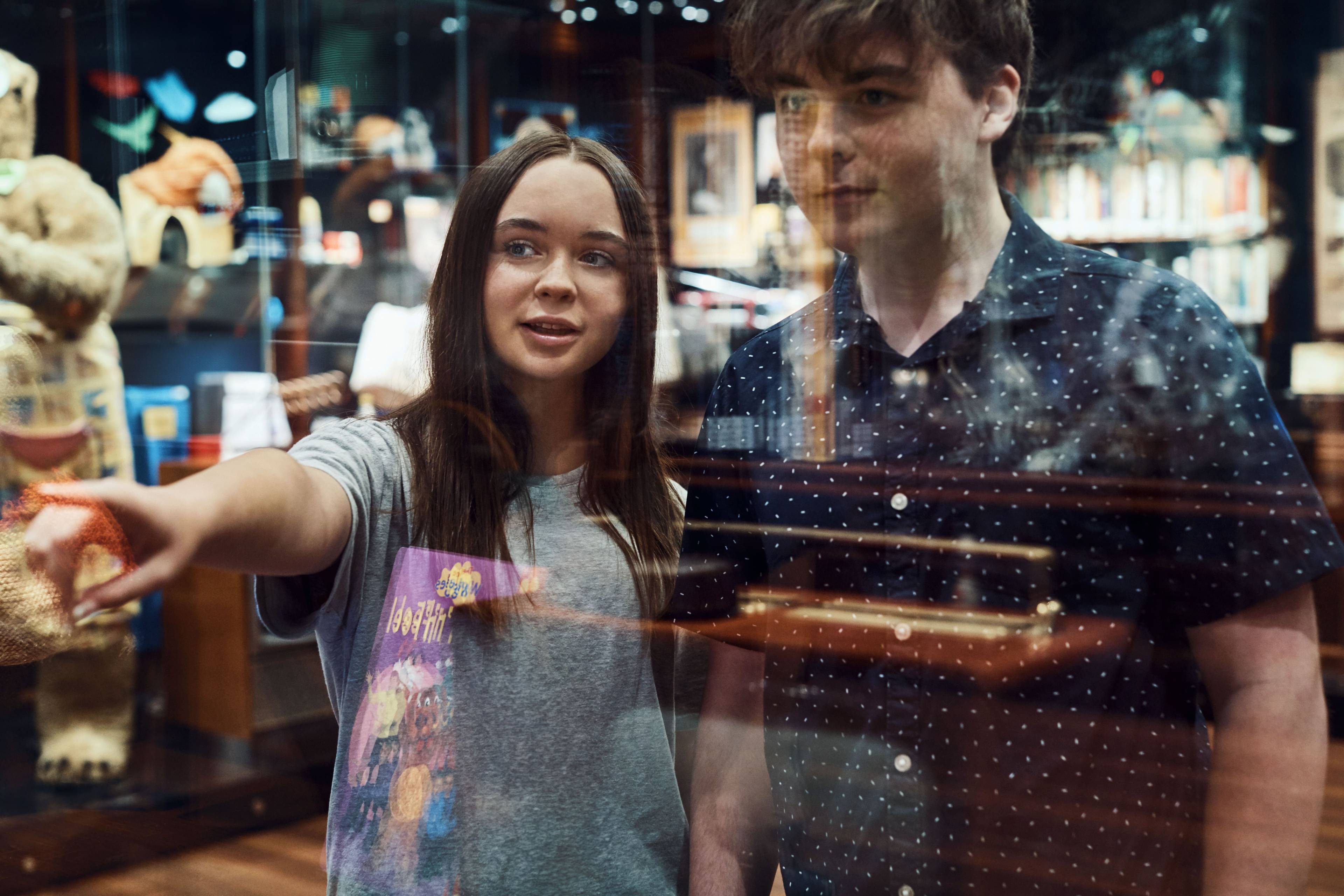
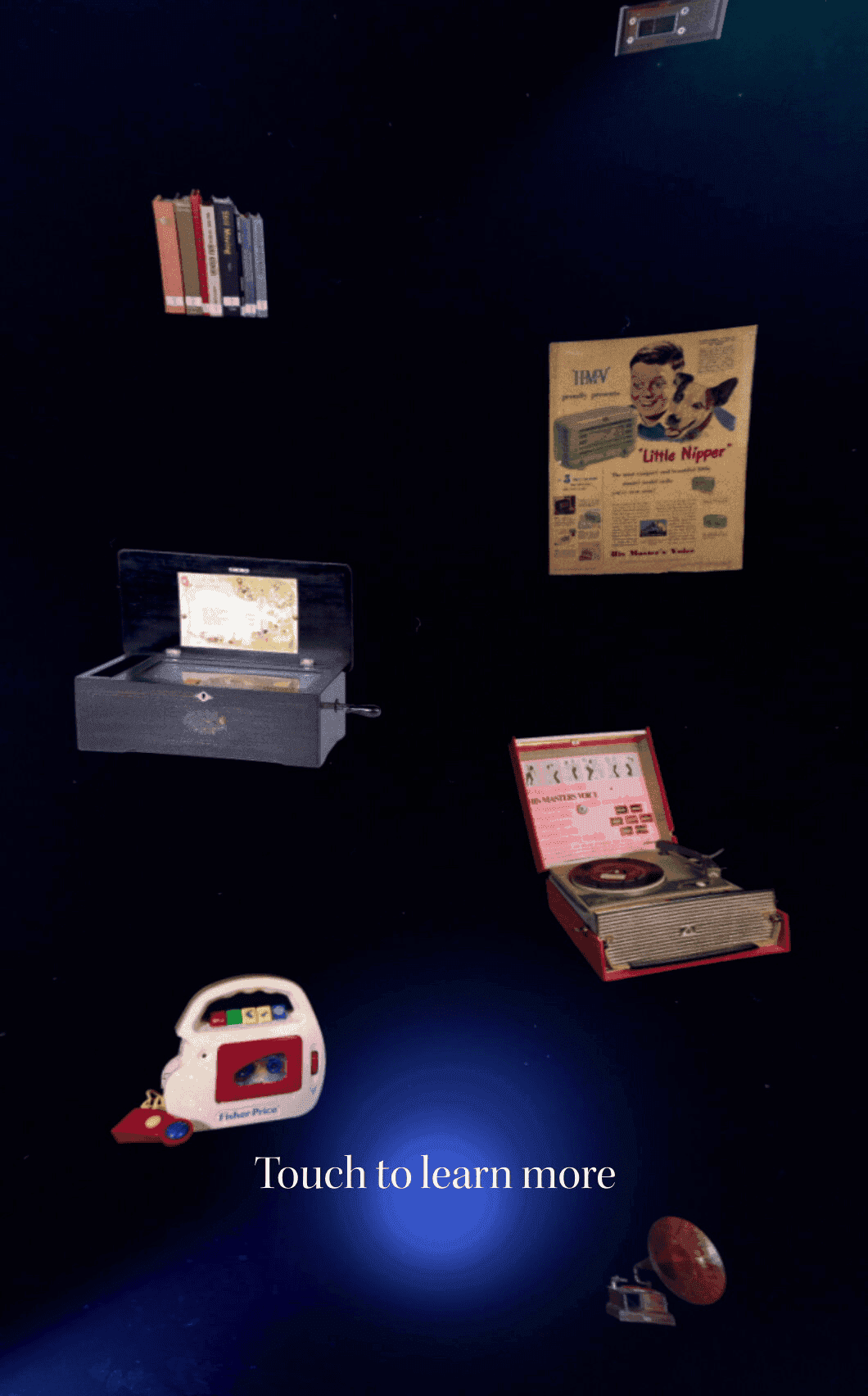
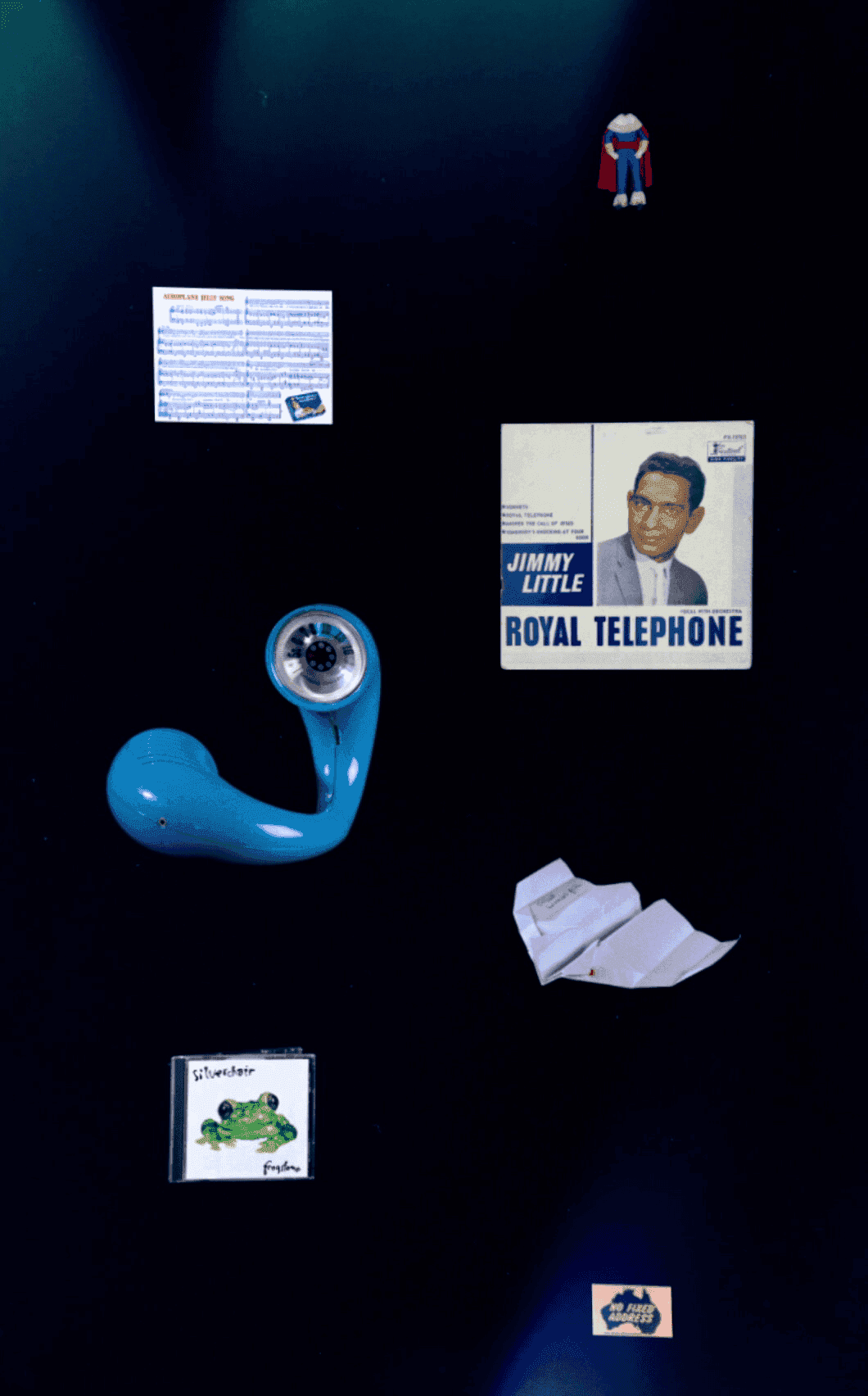
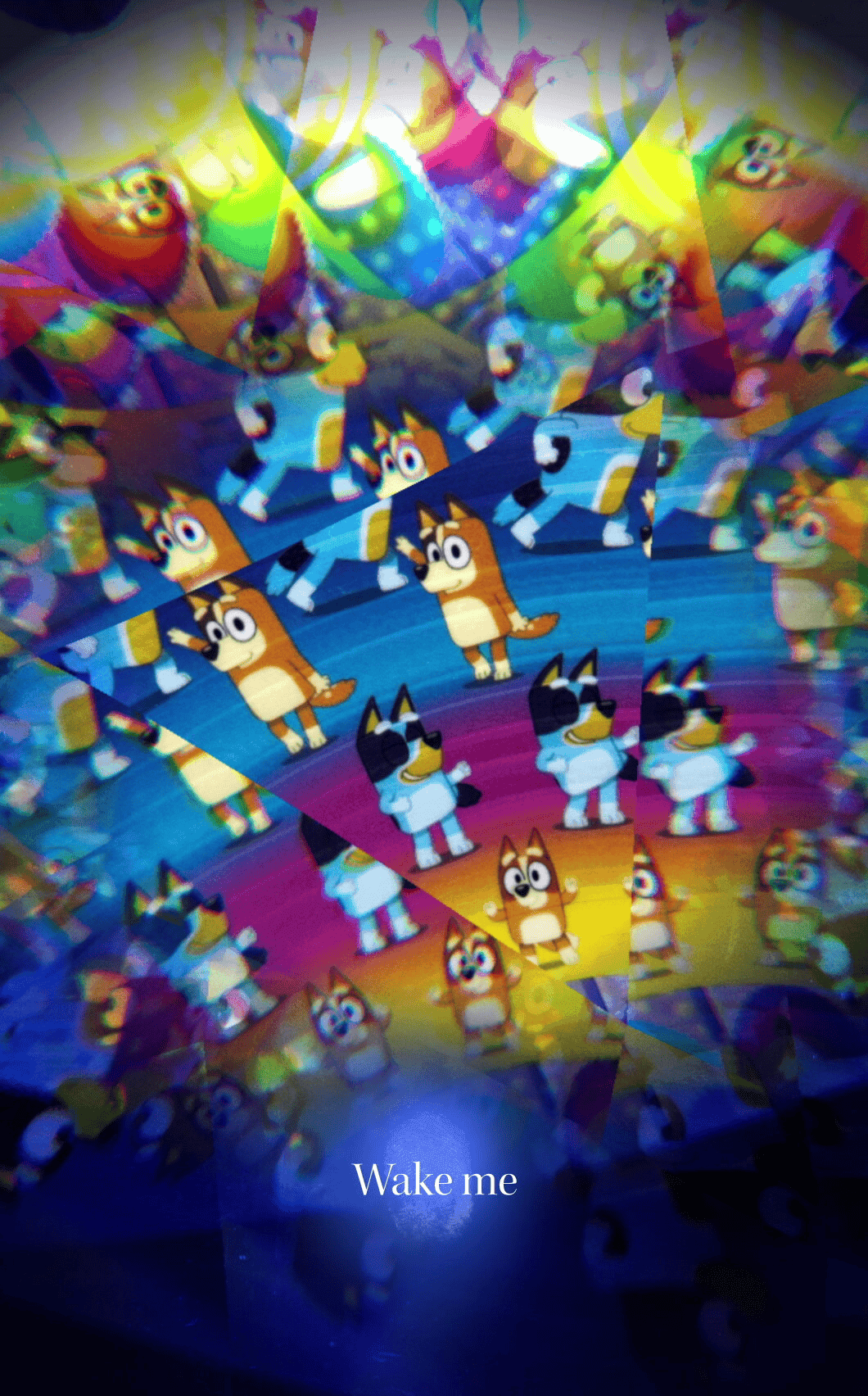
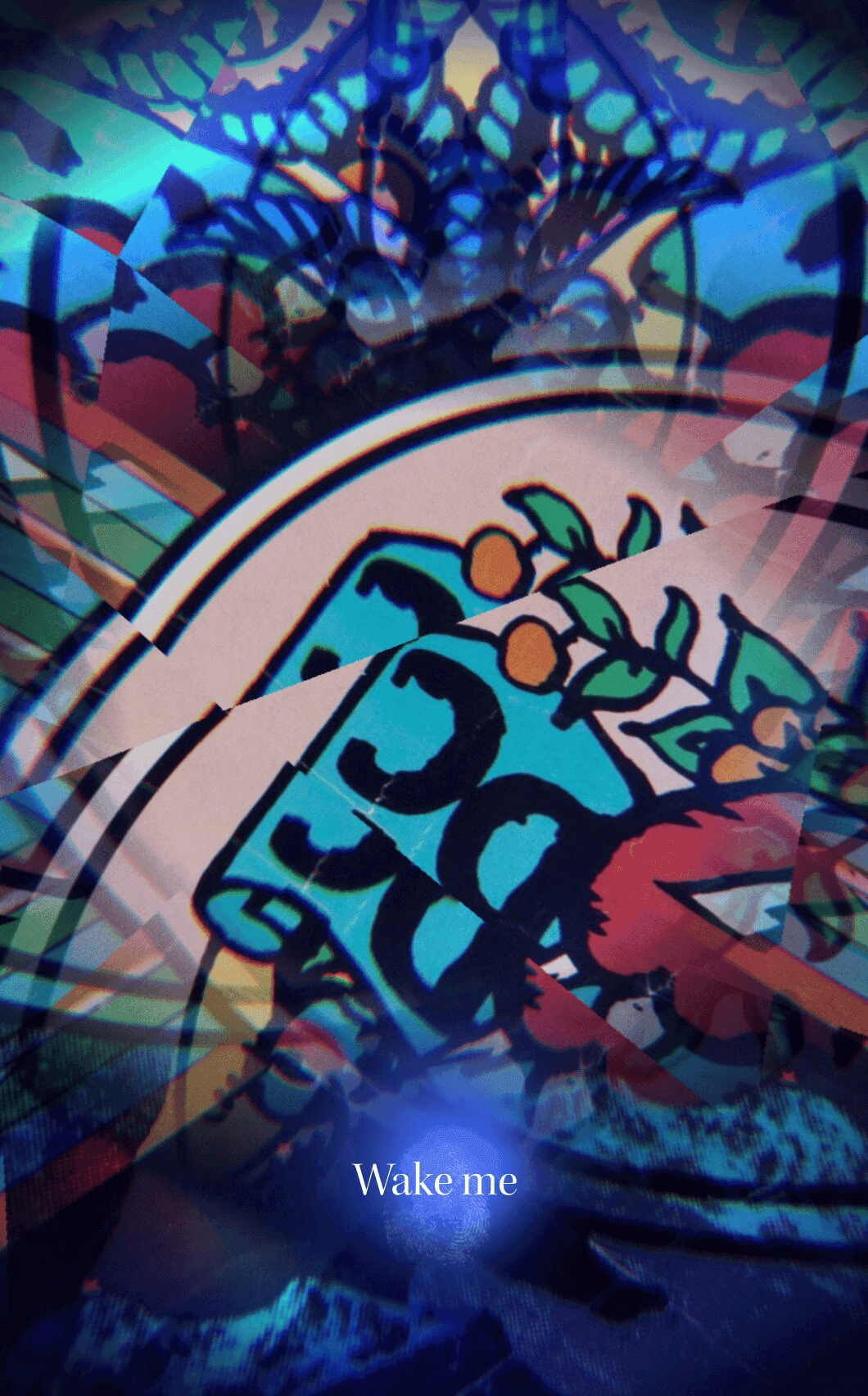
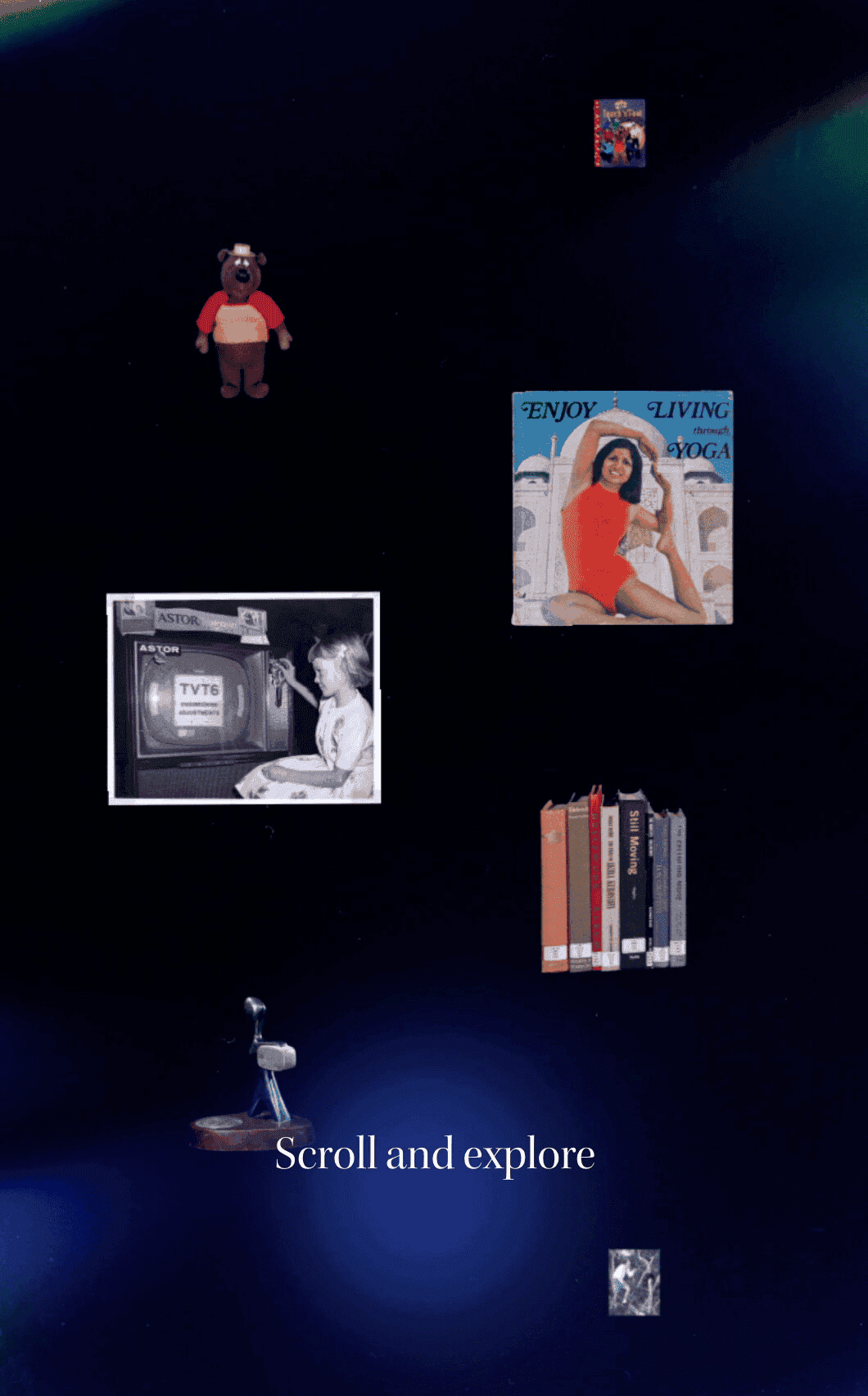
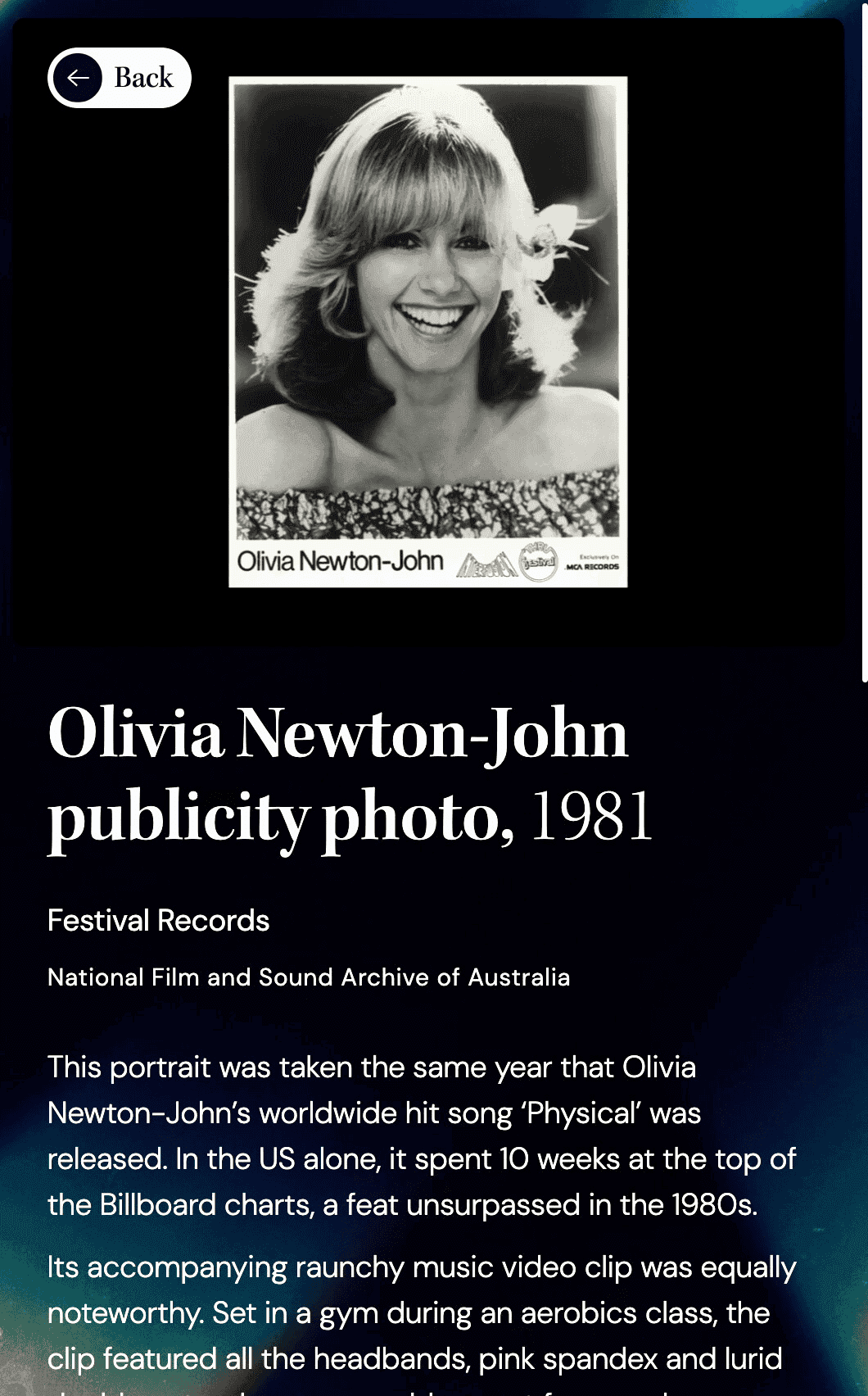
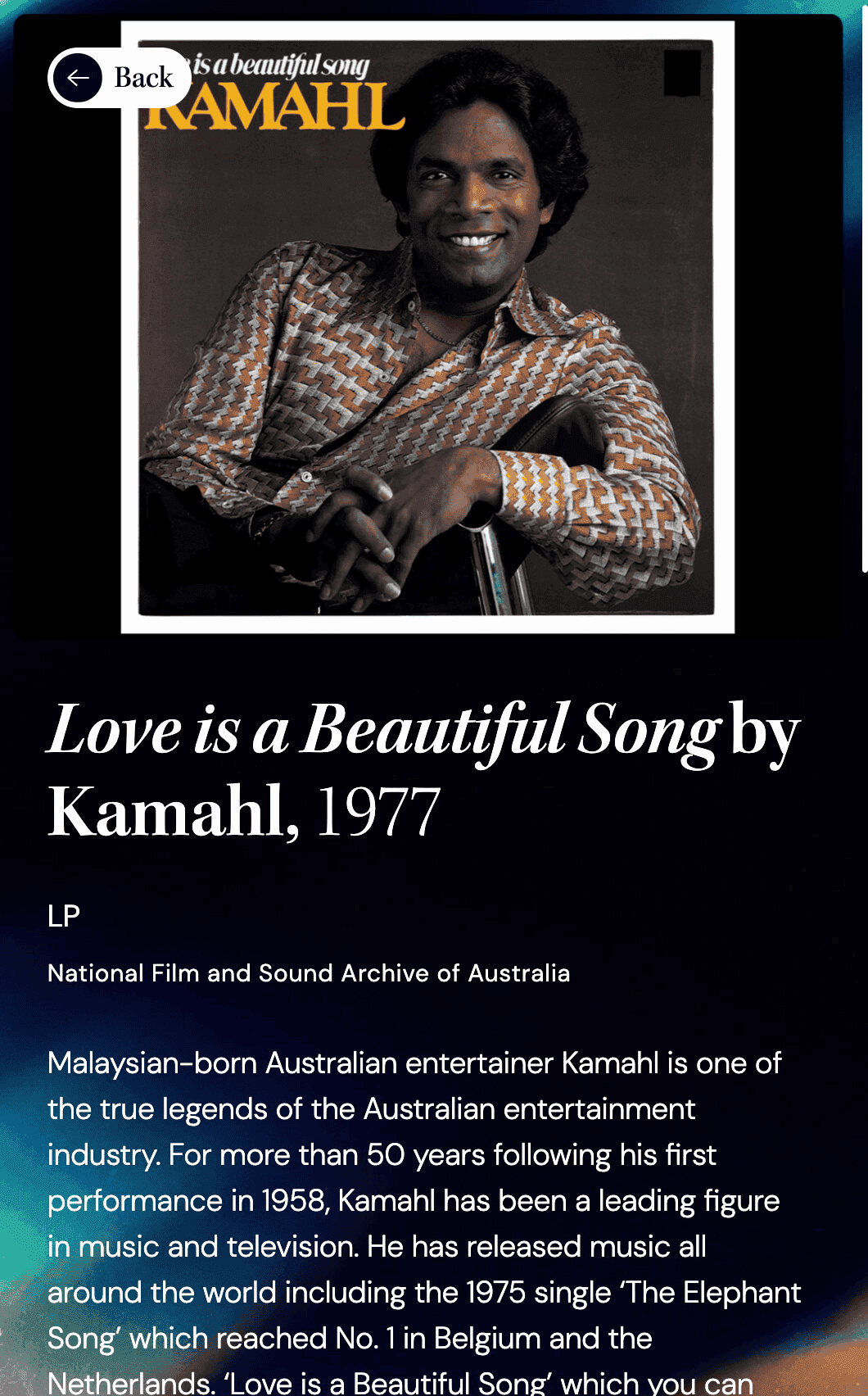
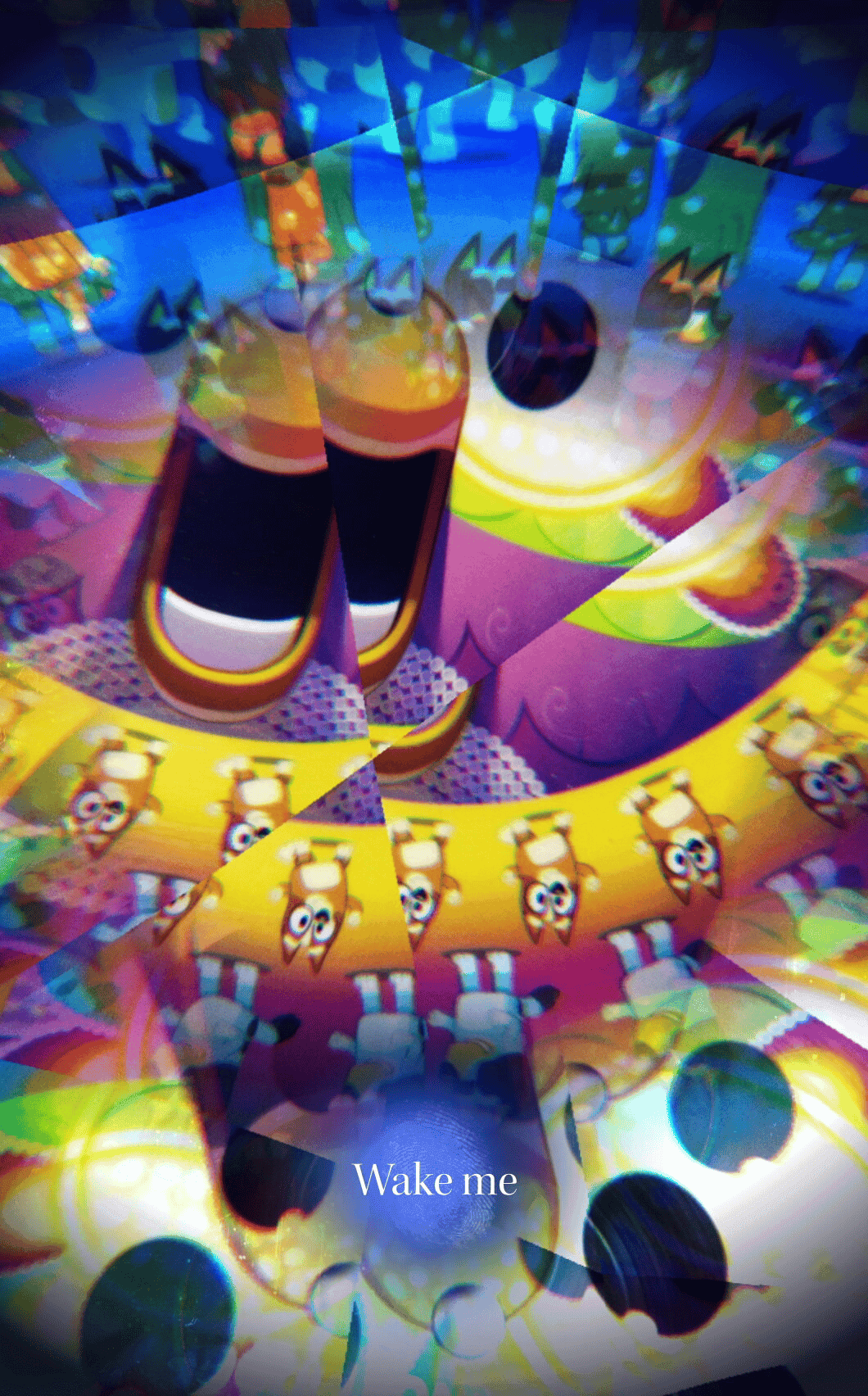
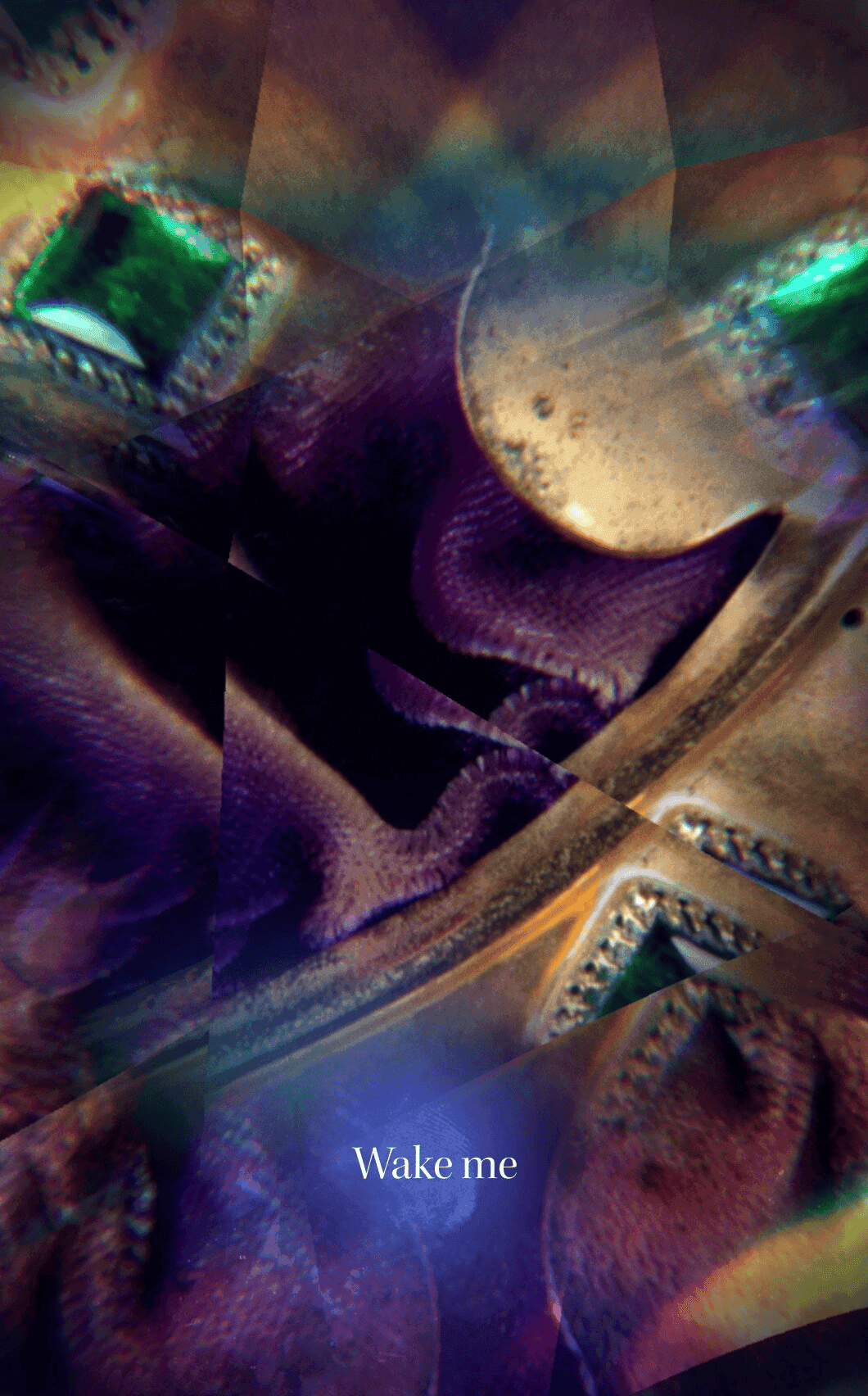
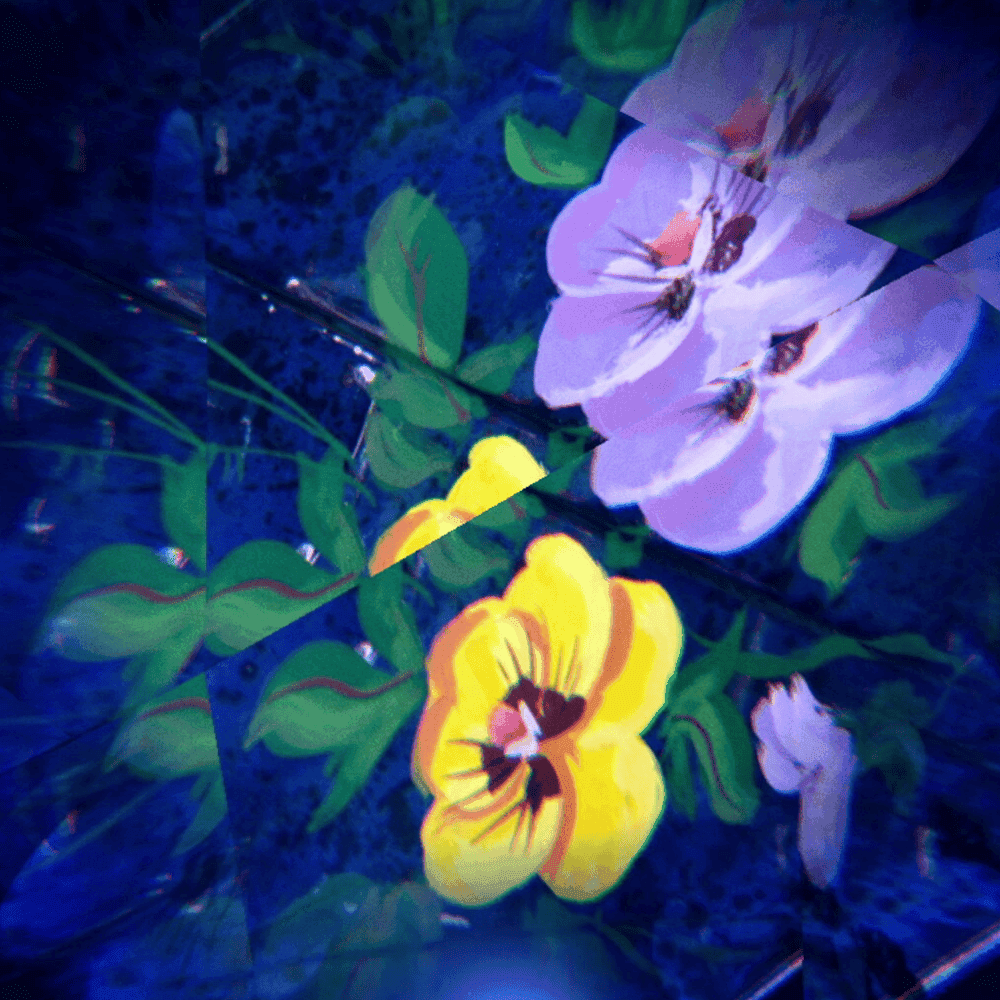
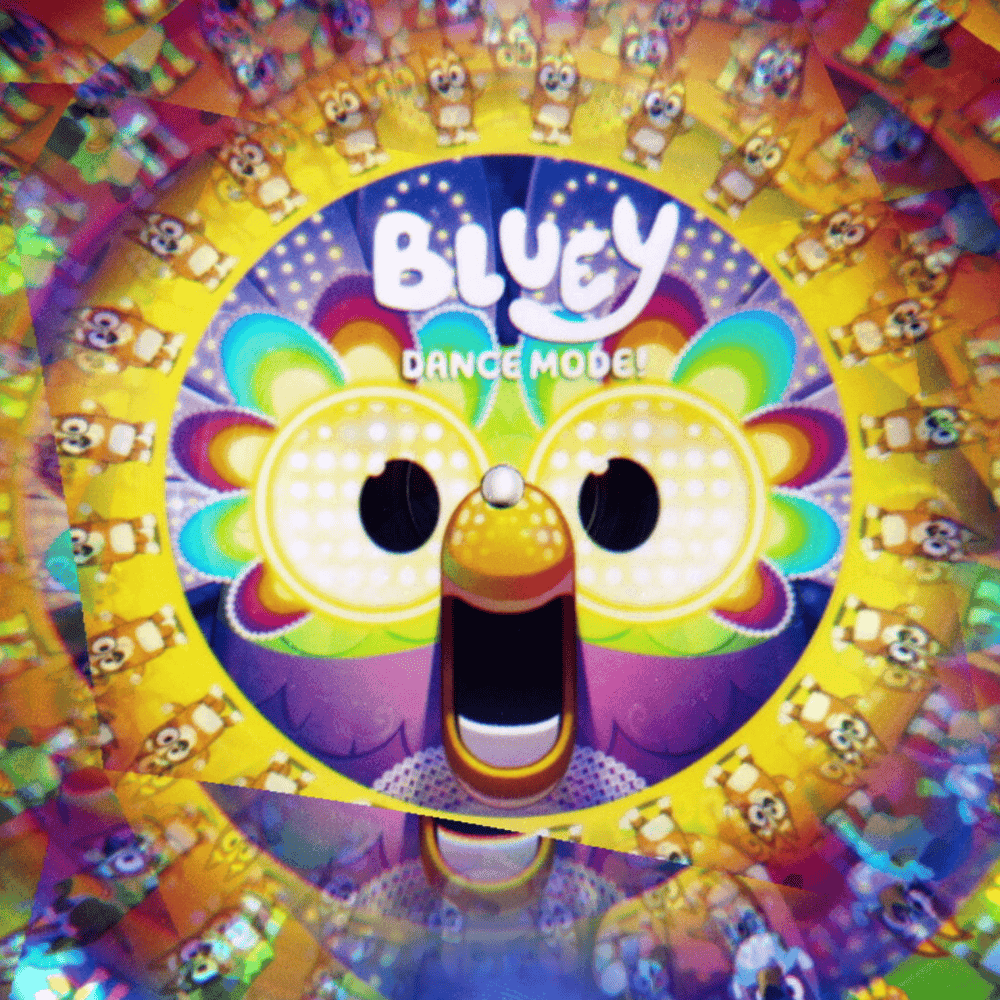
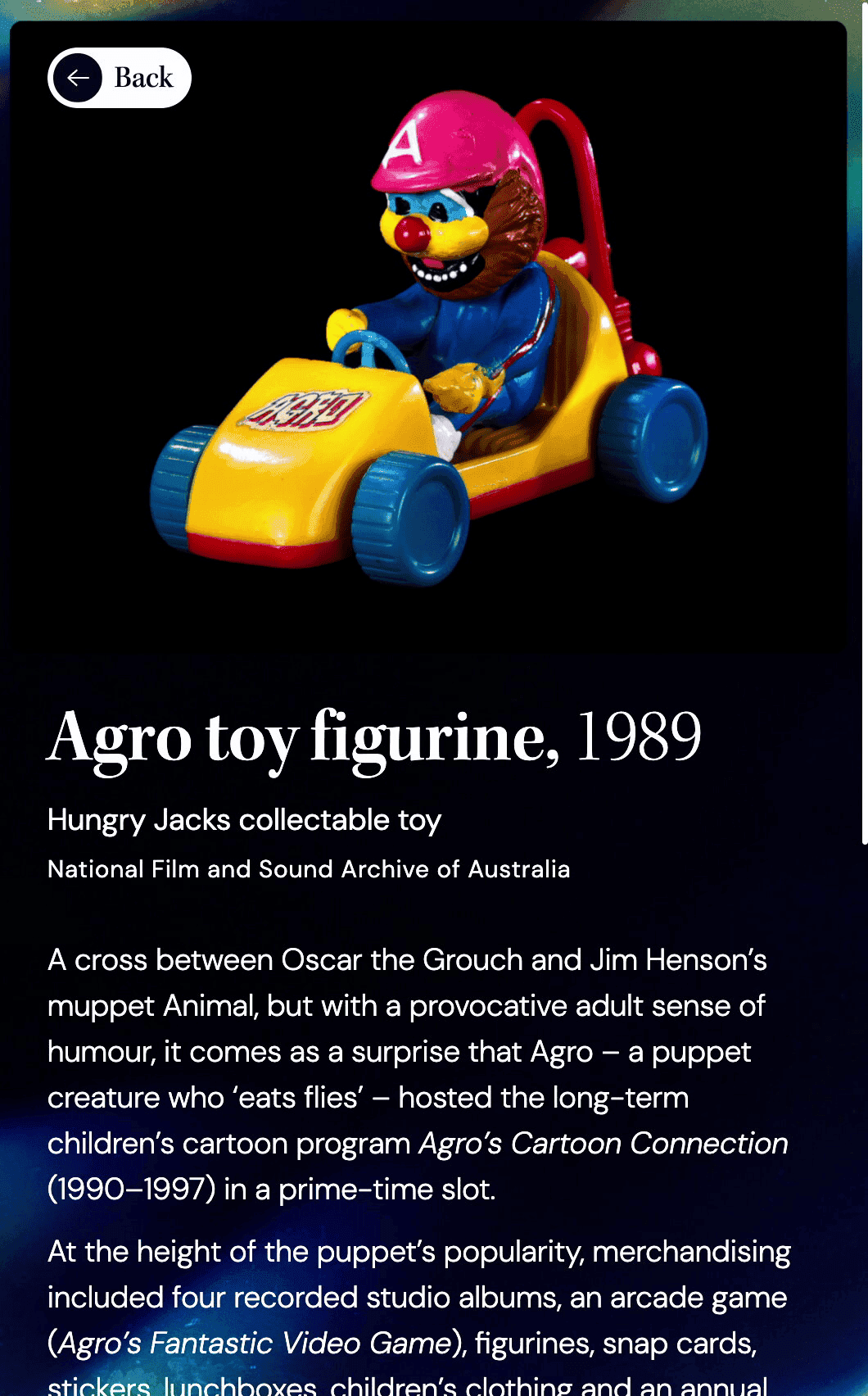
Far more than conventional object labels, we developed a fractured, glassy and refractive interface language that builds directly on the exhibition’s visual motifs. Drawing on metaphors of the looking glass, the screens feel discovered among the objects themselves. Visitors move fluidly between artefacts and curatorial stories, from Australia’s early playback technologies to pop powerhouses such as Kylie Minogue and Yothu Yindi.

Working in collaboration with NFSA exhibition designers, archivists and production teams, the digital layer was conceived as an extension of the exhibition architecture. We shaped an approach that encourages curiosity over instruction, inviting visitors to explore media galleries, archival video, audio with responsive EQ visualisations, and layered curatorial text within a single fluid interface.

All video and audio content is fully closed-captioned, and the application adheres to international exhibition and accessibility guidelines, including considered minimum font sizing, colour contrast, legibility and generous touch targets to support use across varied audiences.

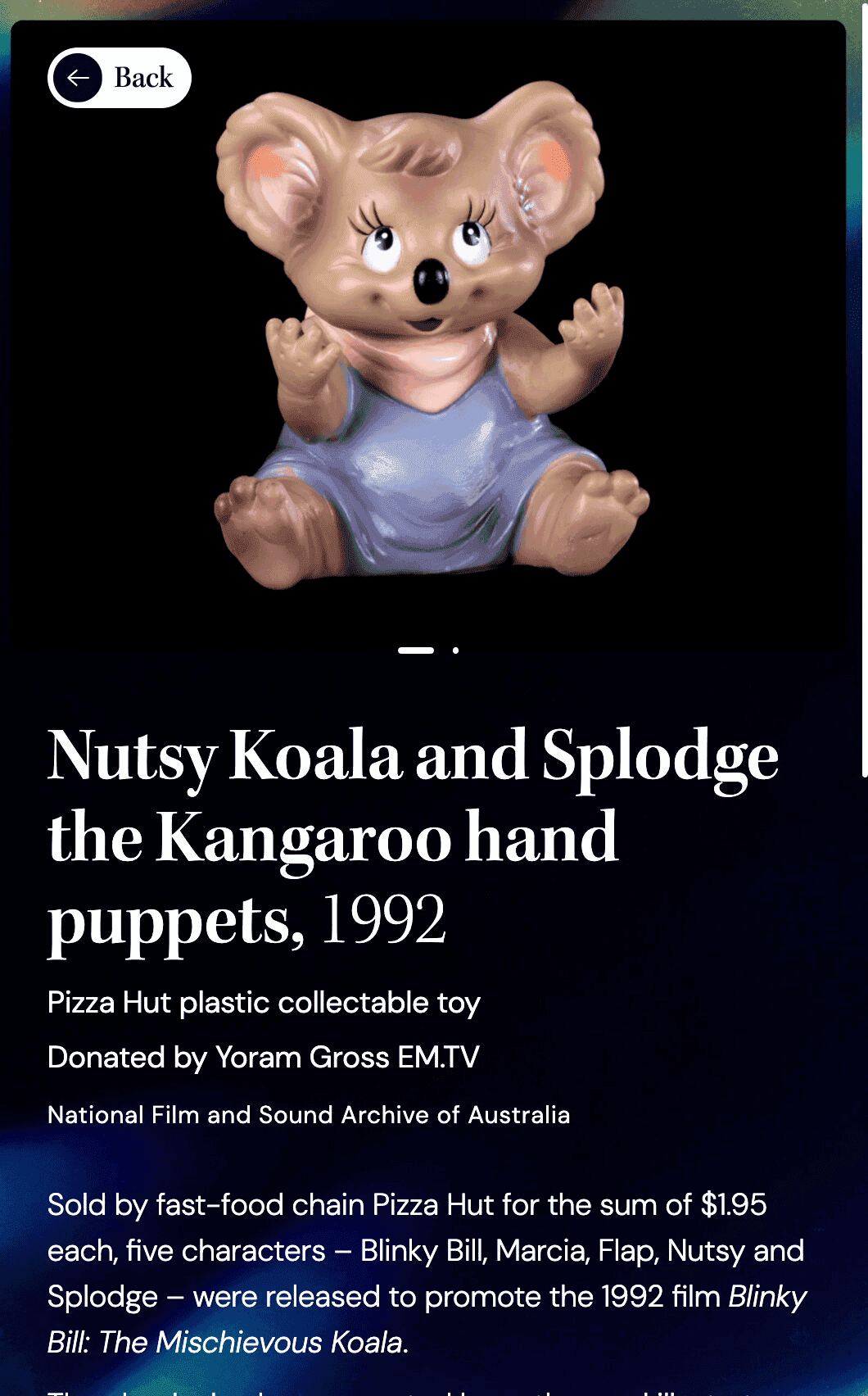
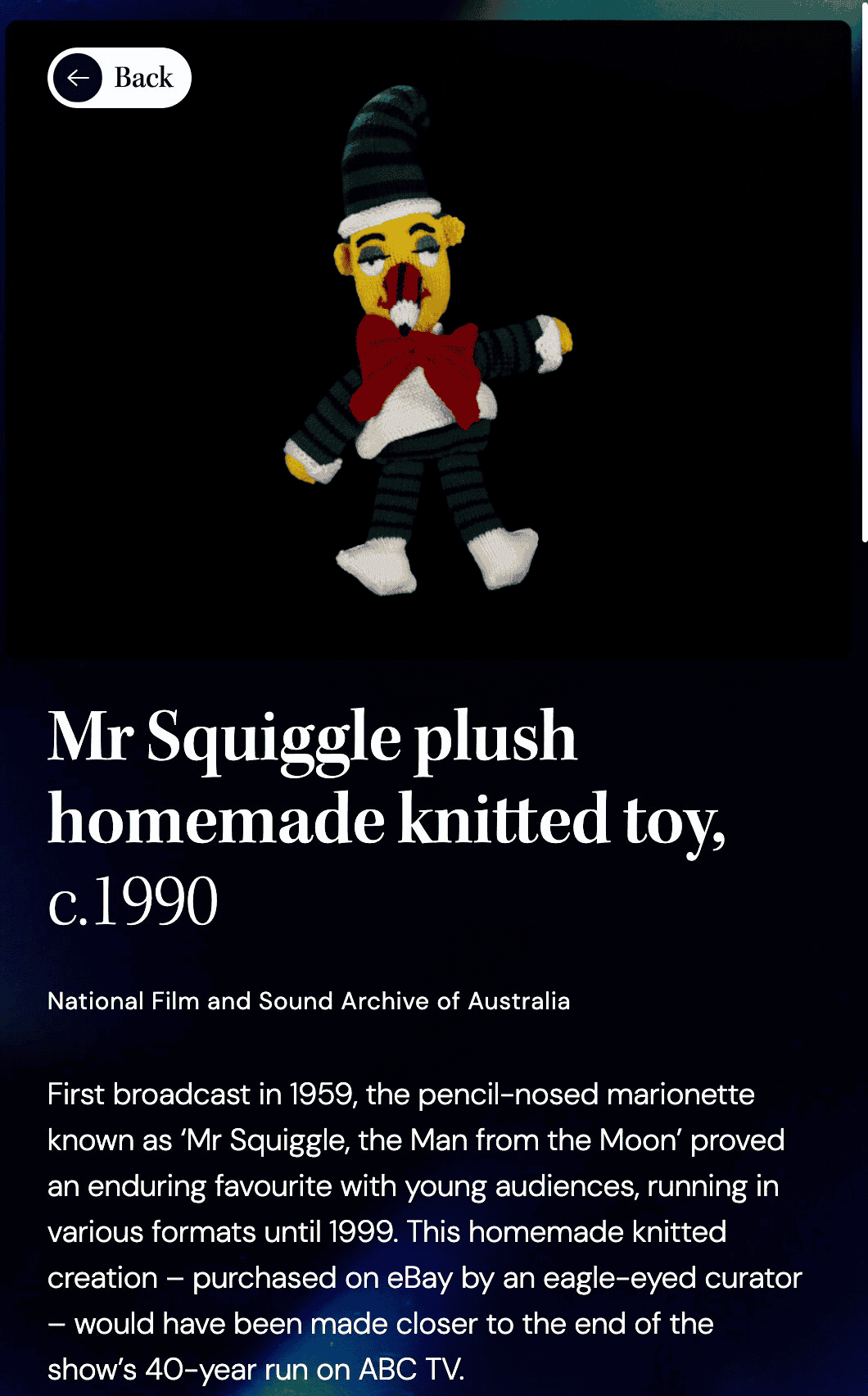
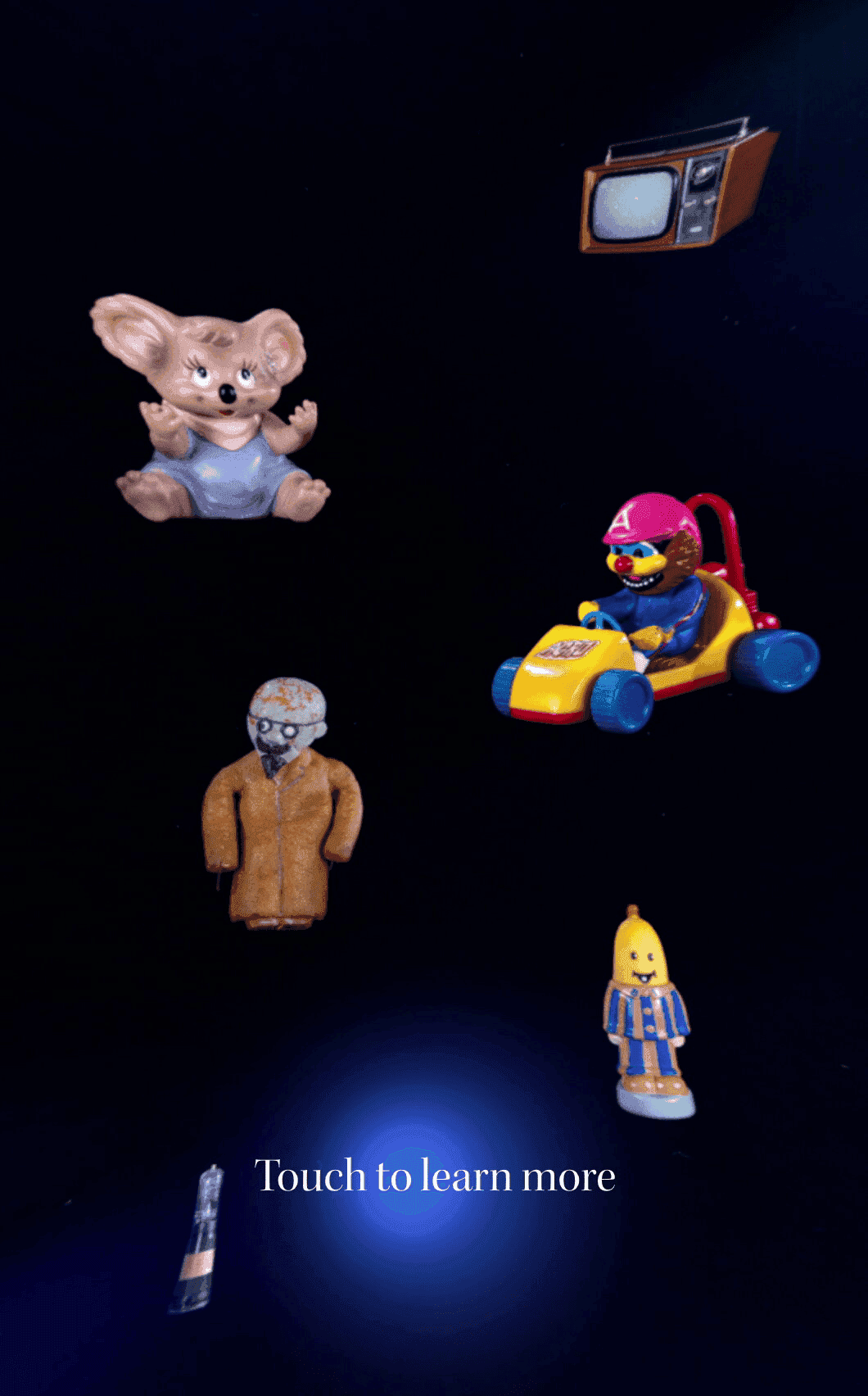
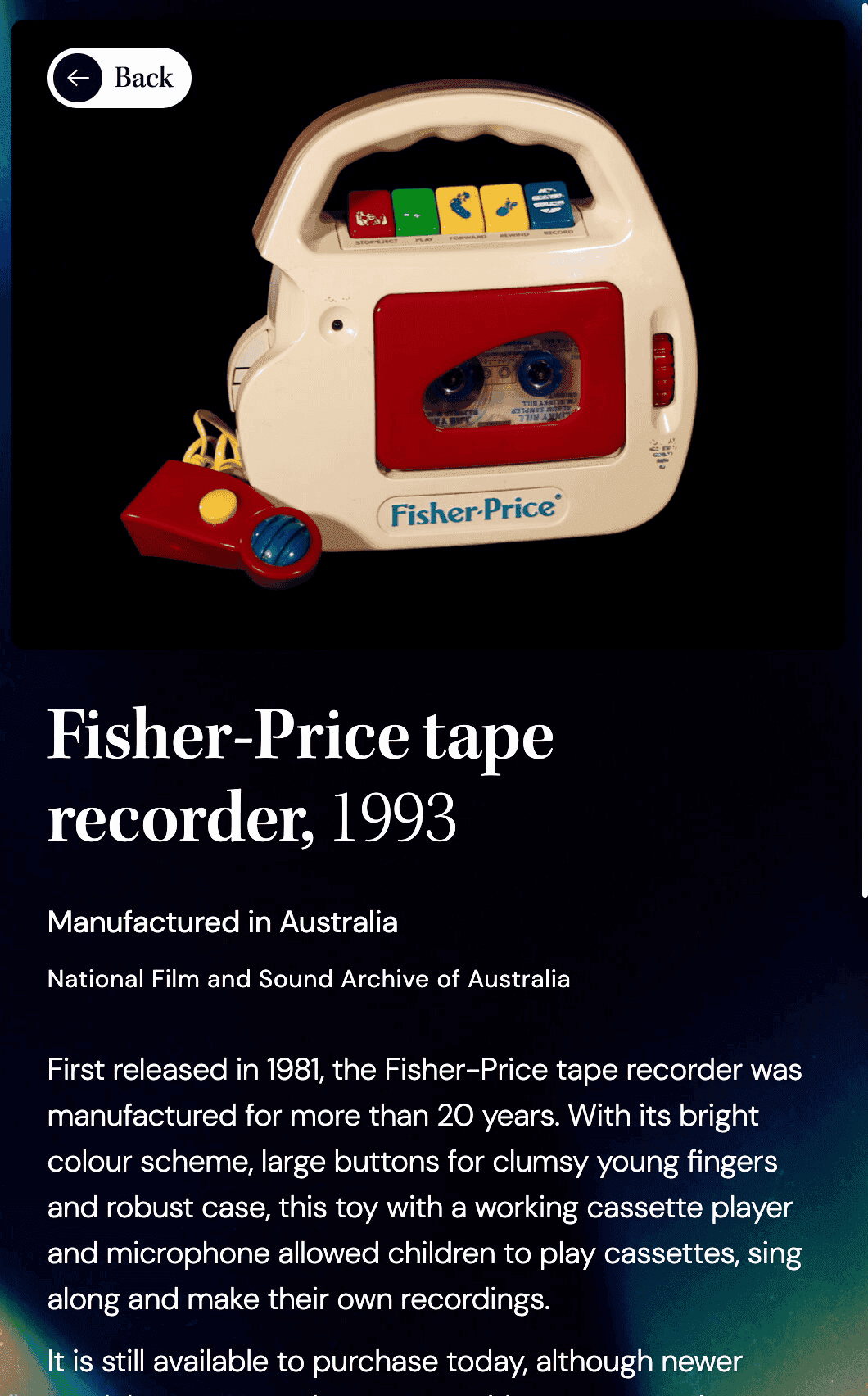
Video clips from children’s television classics such as The Wiggles, Romper Room and Fat Cat and Friends sit alongside 360-degree scans of plush toys and branded board games. Visitors can explore AC/DC posters that once lined teenage bedroom walls in the 1980s, or rediscover vintage video game advertising featuring Mr. T and the Atari. Each object opens into layered media and context, revealing the cultural life surrounding the artefact on display.

Technology

Built in Next.js, with real-time 3D rendering powered by WebGL using Three.js and custom GLSL shaders. This enabled fluid, tactile interactions and layered distortions that reinforce the themes of memory, reflection and rediscovery. Content is authored and managed directly within the NFSA’s in-house GovCMS environment, ensuring curatorial control and long-term sustainability. The experiences are deployed via a hardened Electron application across twelve touchscreens distributed throughout the space. The Electron layer manages connectivity, monitoring and automatic recovery, delivering the robustness required for a permanent, high-traffic cultural installation.

280
× objects
A celebration of pop culture curiosities
12
× bespoke experiences
containing hundreds of archival clips and images
1
permanent exhibition
7 days a week

Designed for daily public use, the touchscreens are intuitive for seniors and resilient under the energy of large school groups. Our hardened deployment stack runs seven days a week across twelve screens in a high-traffic permanent exhibition.
The space looks and feels fantastic and the response so far from preview staff and the executive team has been ecstatic.
Sam Dignand
Creative Producer
National Film and Sound Archive of Australia

The Library’s digital object labels extend the NFSA’s archival mission into the Canberra gallery, turning each artefact into an interactive point of discovery. Visitors can watch archival footage, listen to historical audio, explore 3D scans of objects, and access layered curatorial text, all within an interface that reflects the exhibition’s whimsical design. By centralising interpretation in this way, the screens give space for the objects themselves to shine, while inviting curiosity and playful engagement throughout the room.

For
  • The National Film and Sound Archive of Australia
Delivery
  • Production
    • Concept Development, Creative Direction, Design
  • Design
    • UX, Graphic Design, Motion Graphics
  • Development
    • Electron, Next.js, React, Three.js, WebGL GLSL, Drupal CMS Integration, AWS Dev Ops
  • Hardware
    • Specification, Integration
Collaborators
  • Photography
    • Grace Costa (NFSA)
    • Eloïse Gonin (Distil)
  • GovCMS
    • Technocrat
compare + contrast

More Projects

something similar...
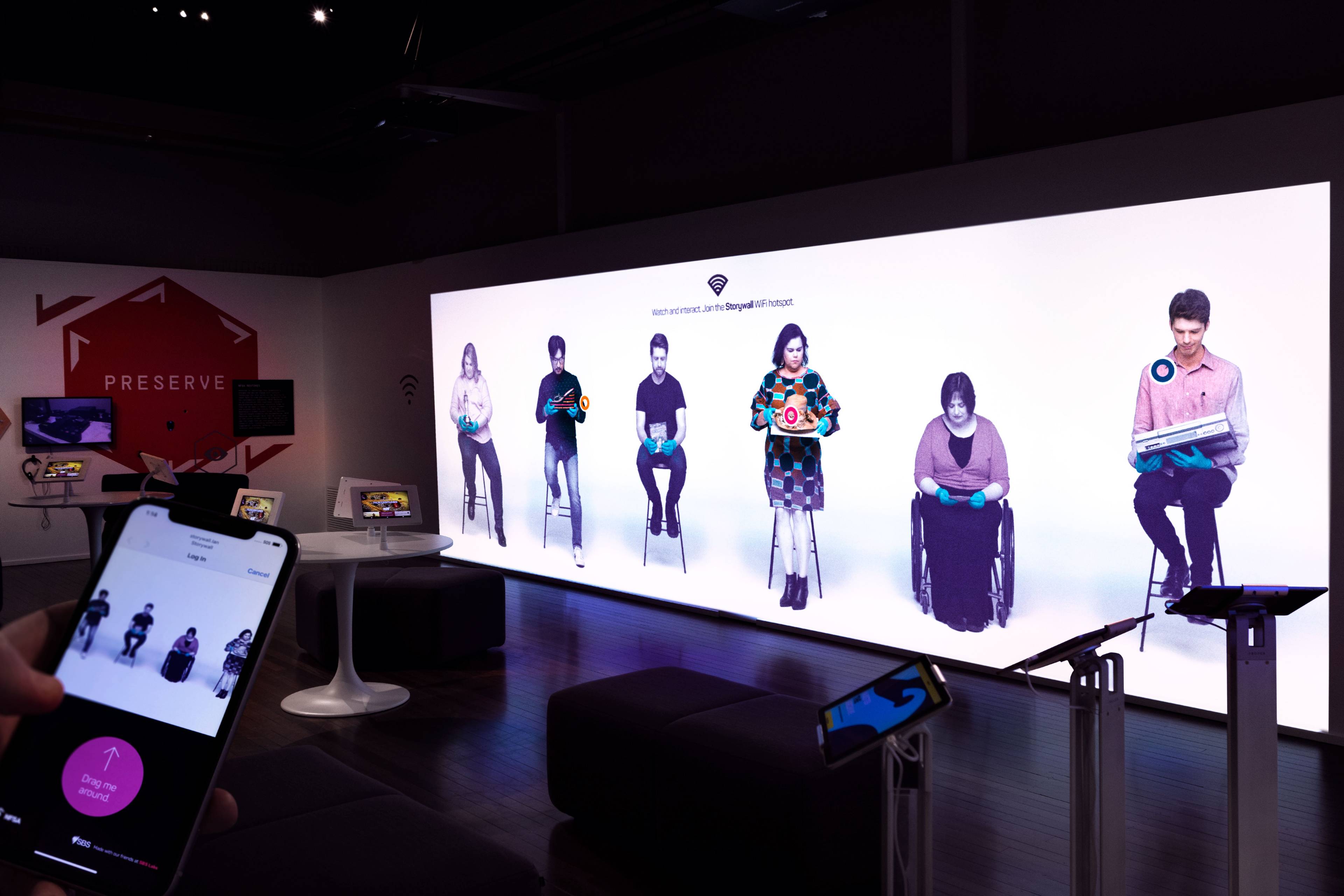
Storywall
...or something very different
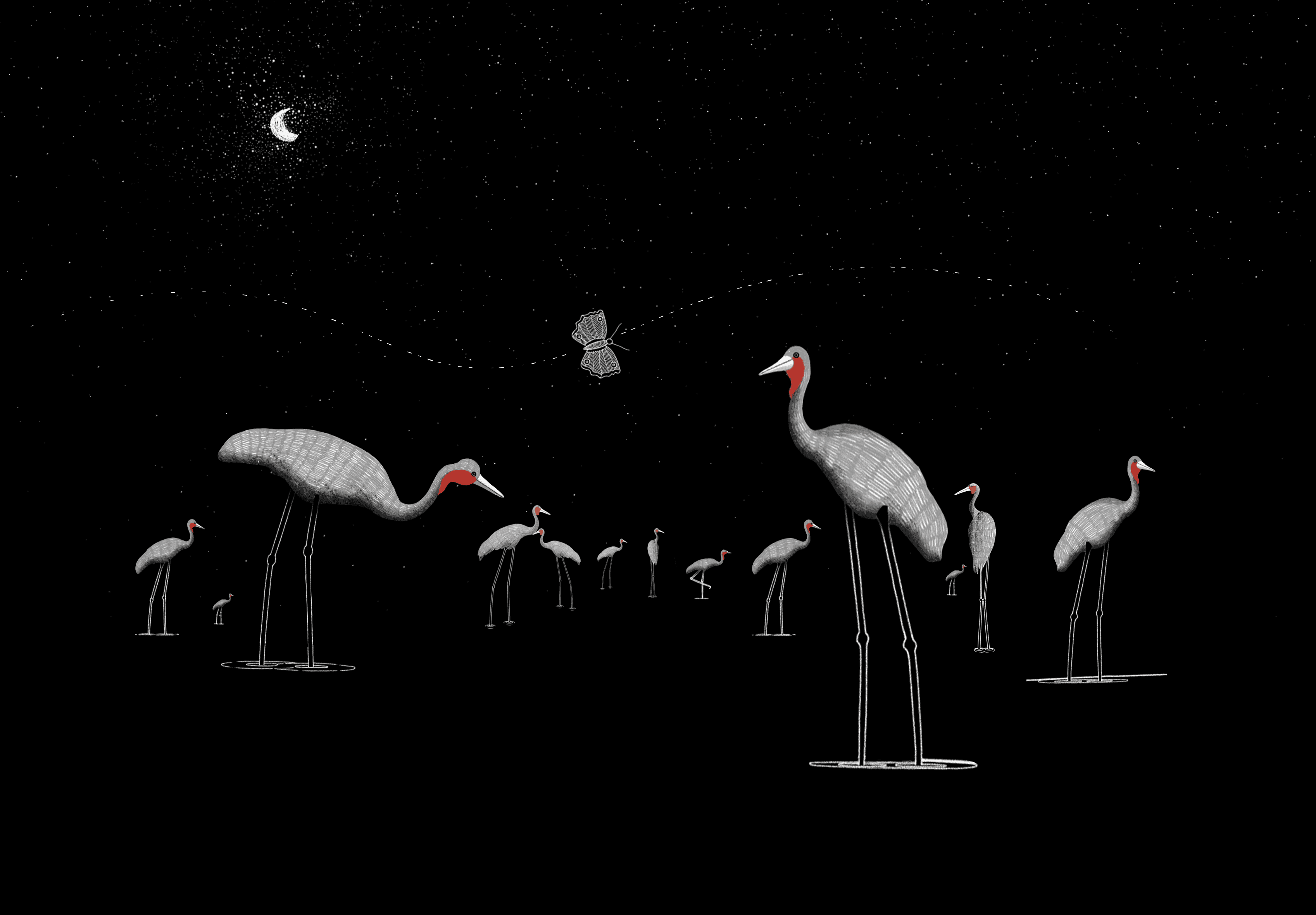
My Grandmother’s Lingo