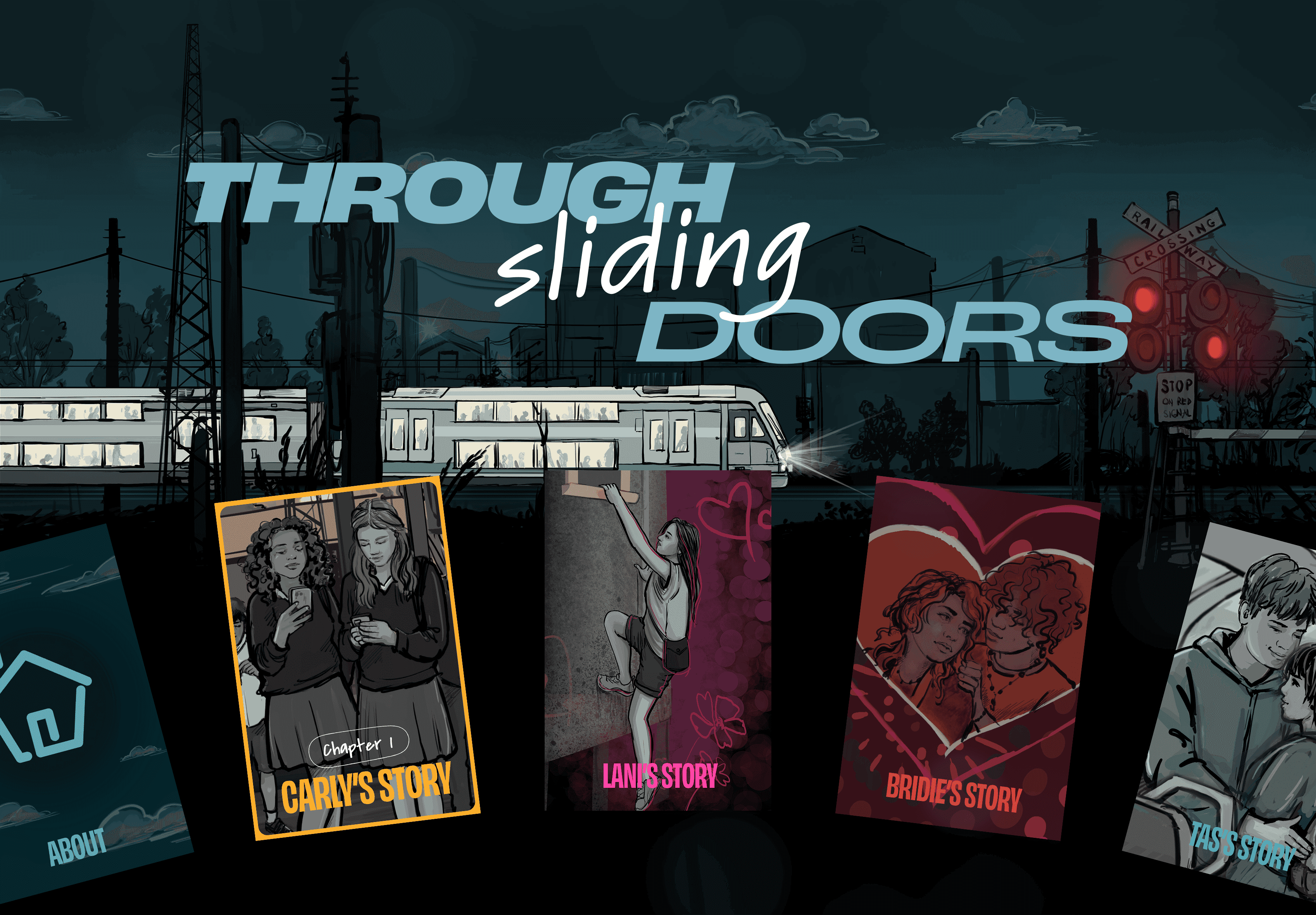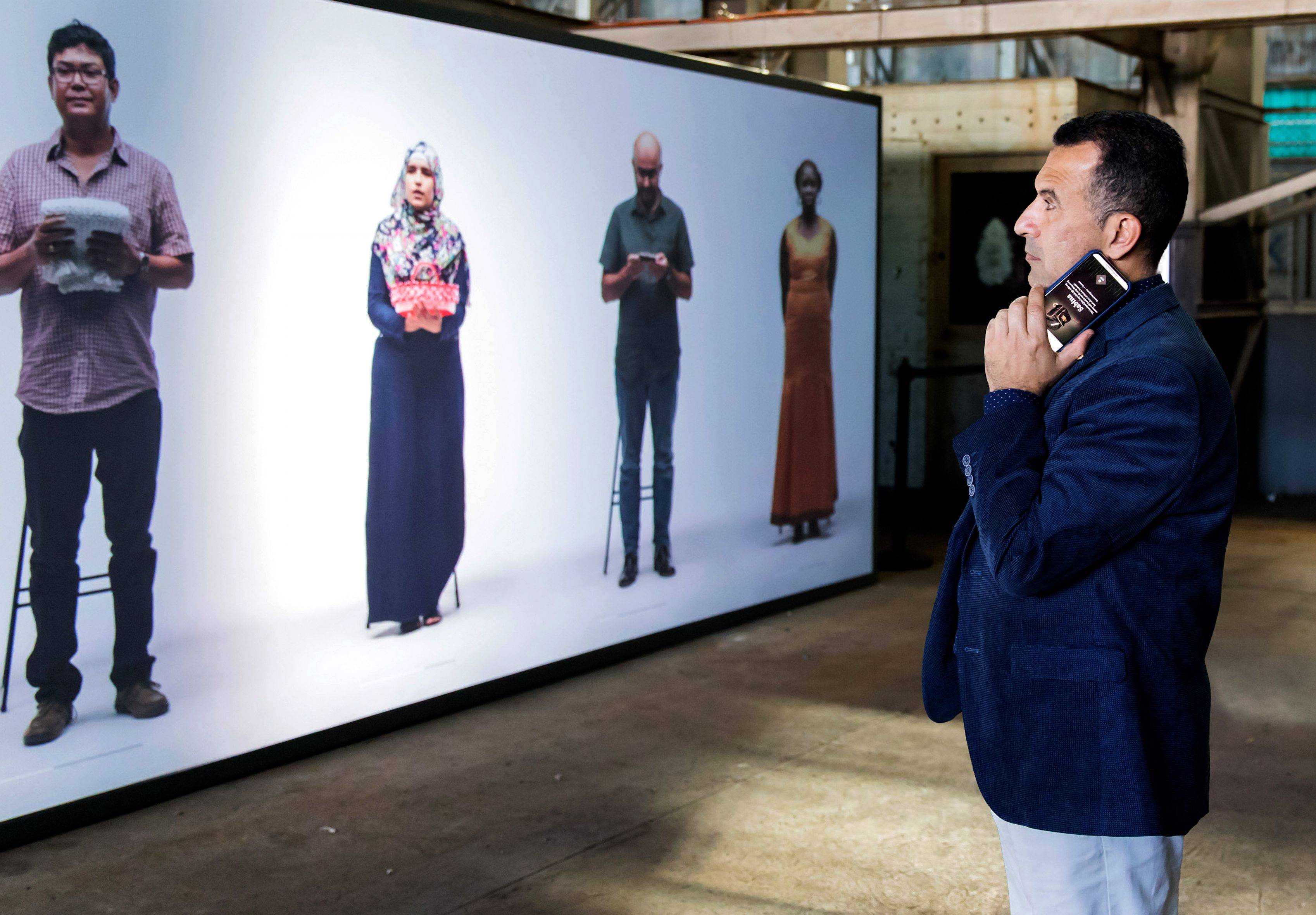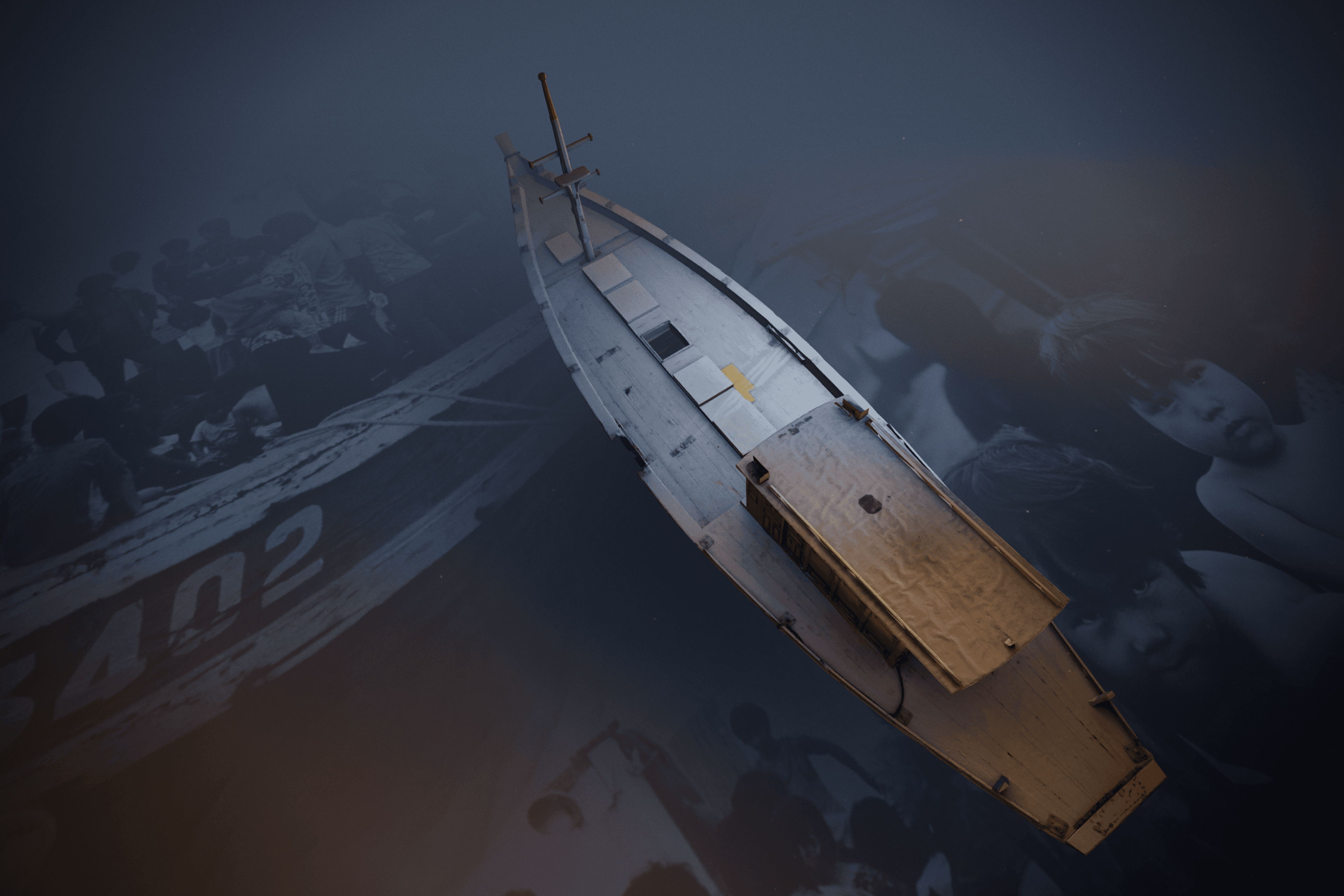
The Australian National Maritime Museum engaged us to design and build a series of interactive 3D stories around significant vessels in its collection, including Tự Do, one of the most important objects in its migration collection, and the archaeological remains of the Barangaroo Boat. Working with the marketing, curatorial and technology teams on each story, we built real-time rendered interactive animations that run in a standard web browser on desktop and mobile, showing the detail of the Museum’s conservation and 3D capture work to both a general audience and potential funders.
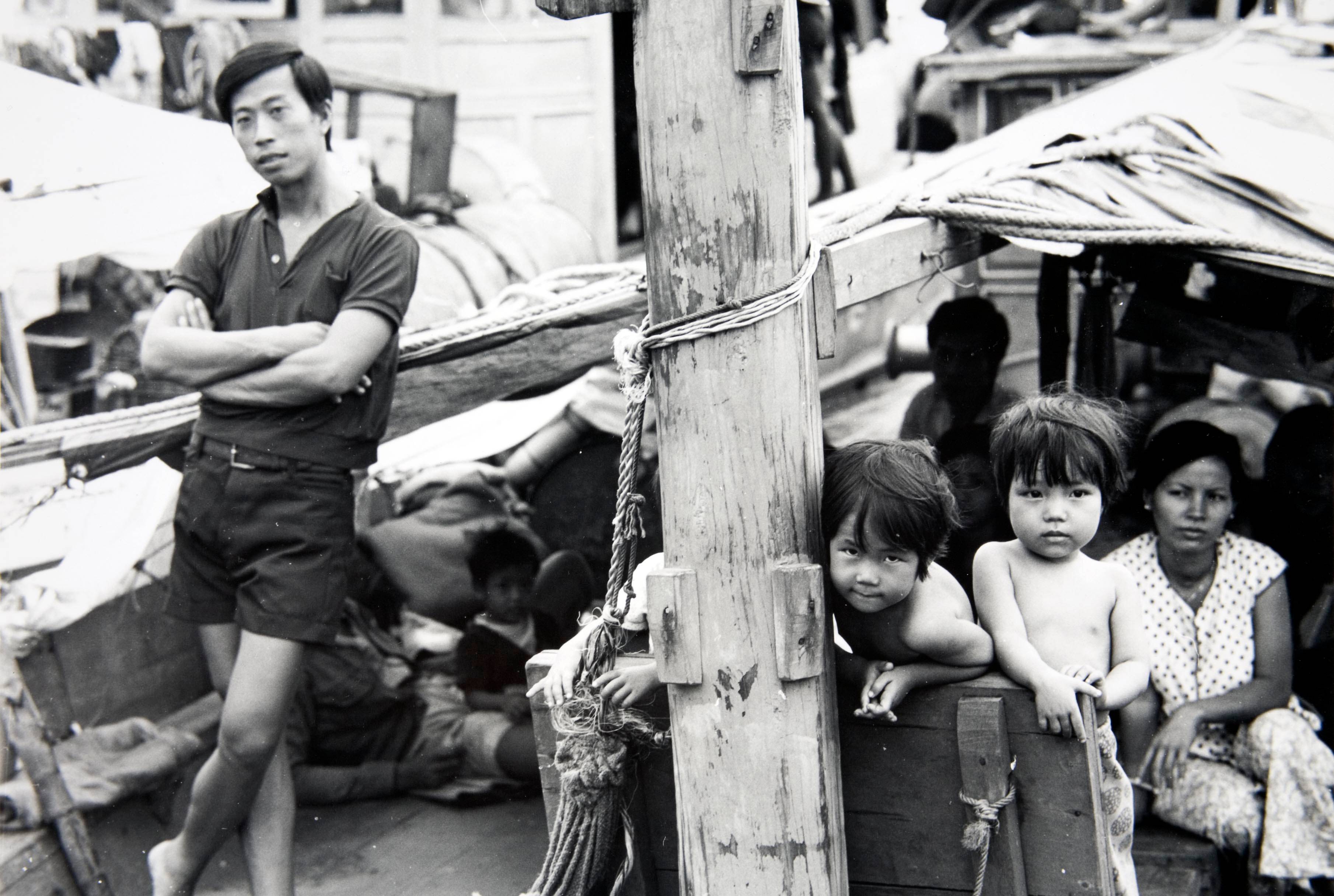
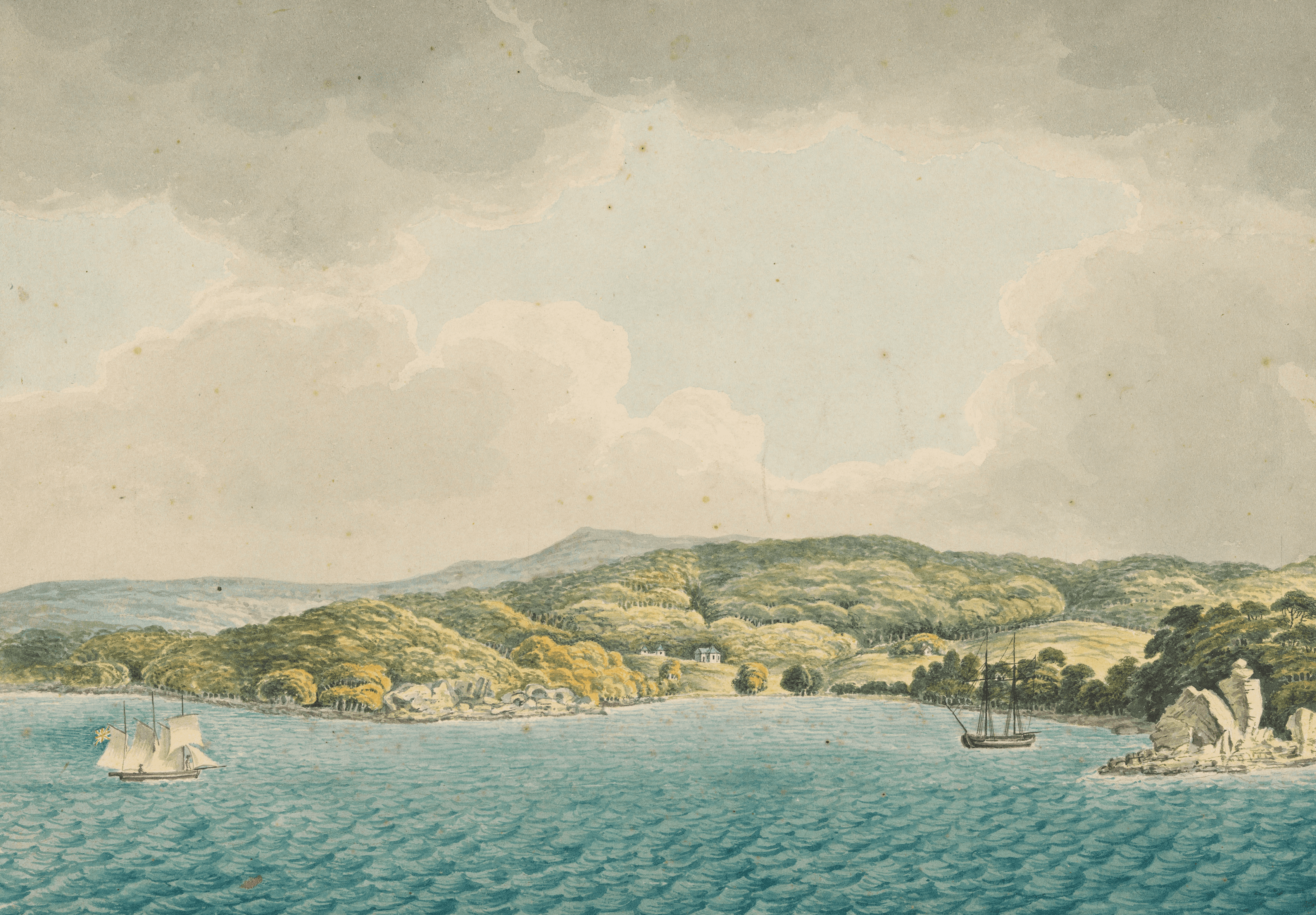
Each is a long-form story. Scrolling moves the camera and lighting around the model, with parts of the vessel come into view as the text describes them. Narrative panels appear alongside the changing view, with archival imagery ranging from colonial illustrations and paintings held by the State Library of New South Wales to photographs taken the day Tự Do arrived in Darwin.
Tự Do means Freedom. It was the fishing boat in which Tan Thanh Lu, his family and other Vietnamese refugees escaped Vietnam after the war. They travelled almost 6,000 kilometres through Southeast Asia, survived pirates and storms, rescued another refugee vessel, and arrived in Darwin on 21 November 1977 with 31 people aboard. The Museum acquired the boat in 1990, and it is now central to how the Museum tells Australia’s migration history. As readers move around the model, they can connect the features of a modest fishing boat to the events on board, and see the size of the vessel that brought 31 people to Darwin.
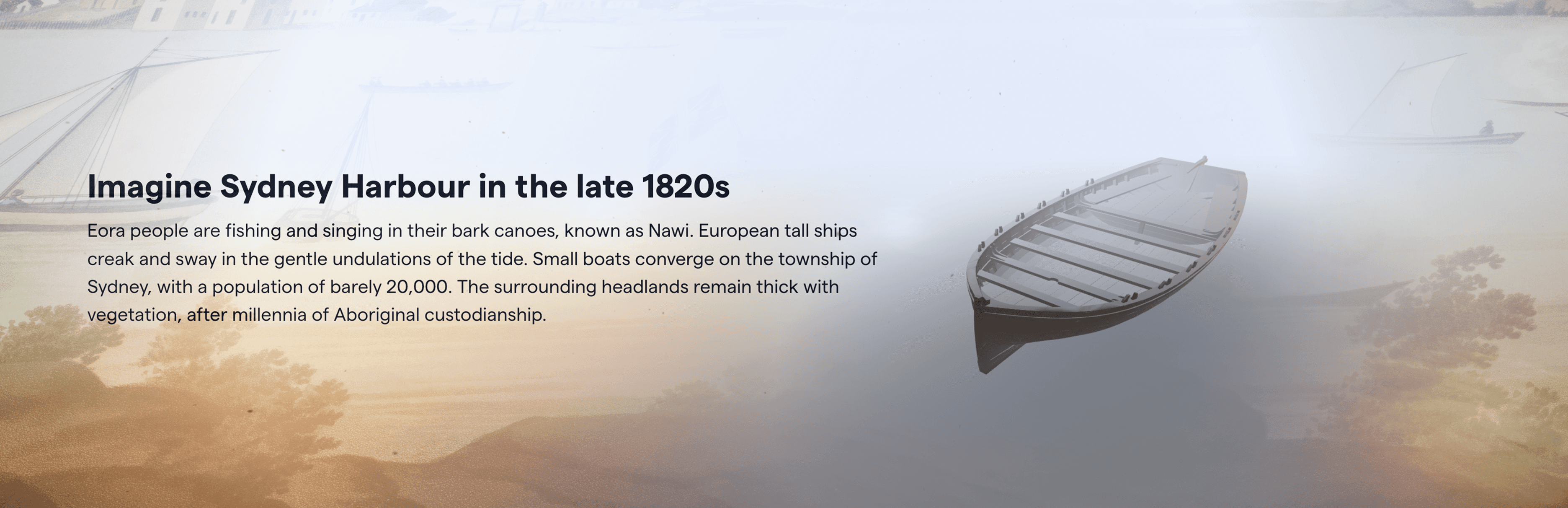
The Barangaroo Boat was found almost complete in 2018, during excavation for Barangaroo Station on the former shoreline of Cockle Bay. Roughly nine metres long and three wide, it is believed to date from the early nineteenth century. It may be the earliest surviving European-style boat built in Australia yet recovered.
“We want to build new formats for museum storytelling. A 3D story can explain an object to the public, build awareness of it, and help fund its conservation. For the Barangaroo Boat, the public and potential funders can imagine the boat as it was, and how it could look once restored.
John-Paul Marin
Director and Executive Producer
Distil
Its timbers were excavated, recorded and separated for conservation, and photogrammetry recorded the form of each piece and its archaeological position. The Museum’s 3D visualisation specialists used that record to reassemble the boat digitally. We built the reassembled model into an interactive 3D story of the boat's discovery, construction, use and conservation.
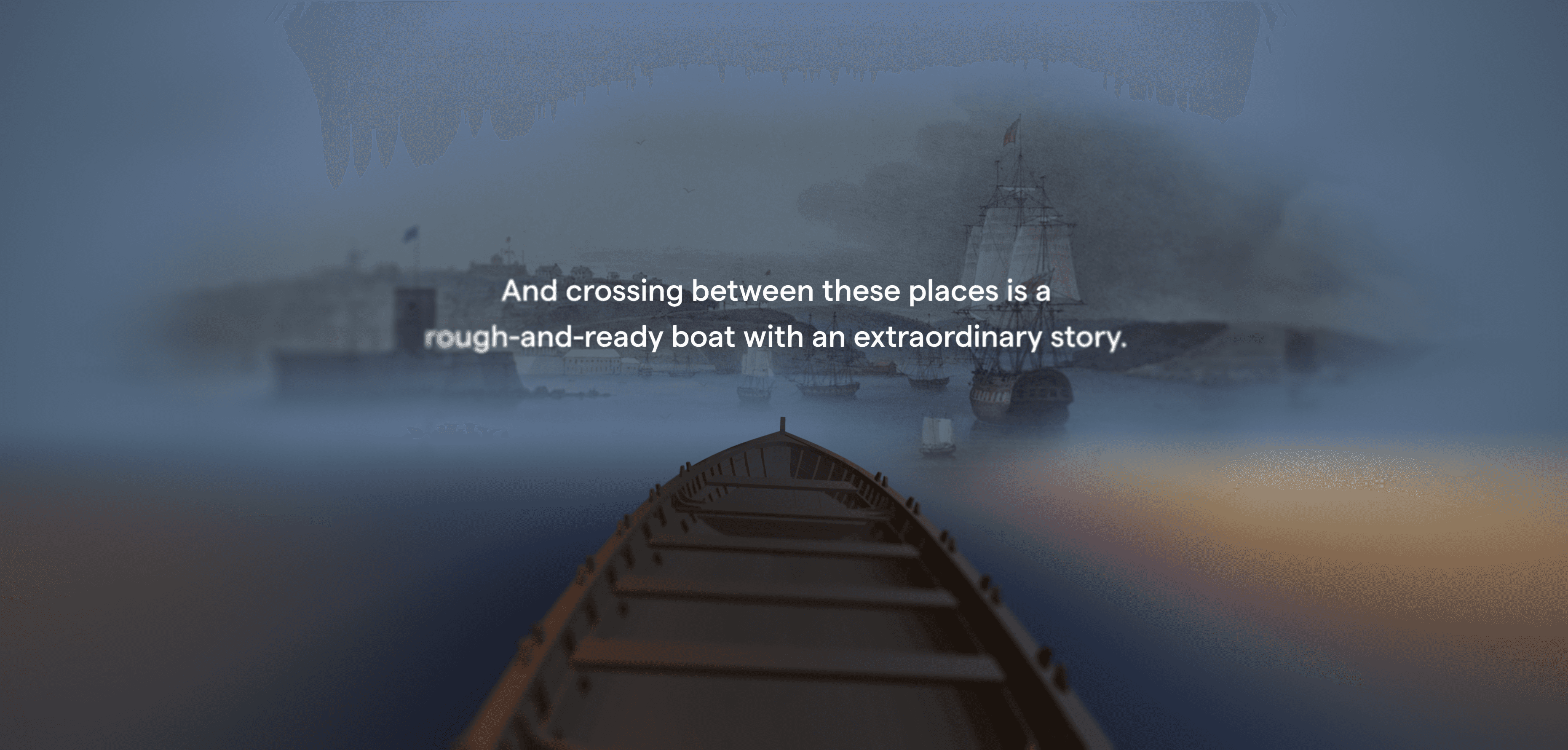
Illustrations and paintings of colonial Sydney are layered behind the model as its setting, placing the boat in the harbour it once worked. As the story progresses, changes in viewpoint and scale show how individual timbers relate to the whole hull, and what they reveal about the maritime economy of early colonial Sydney.
Technology
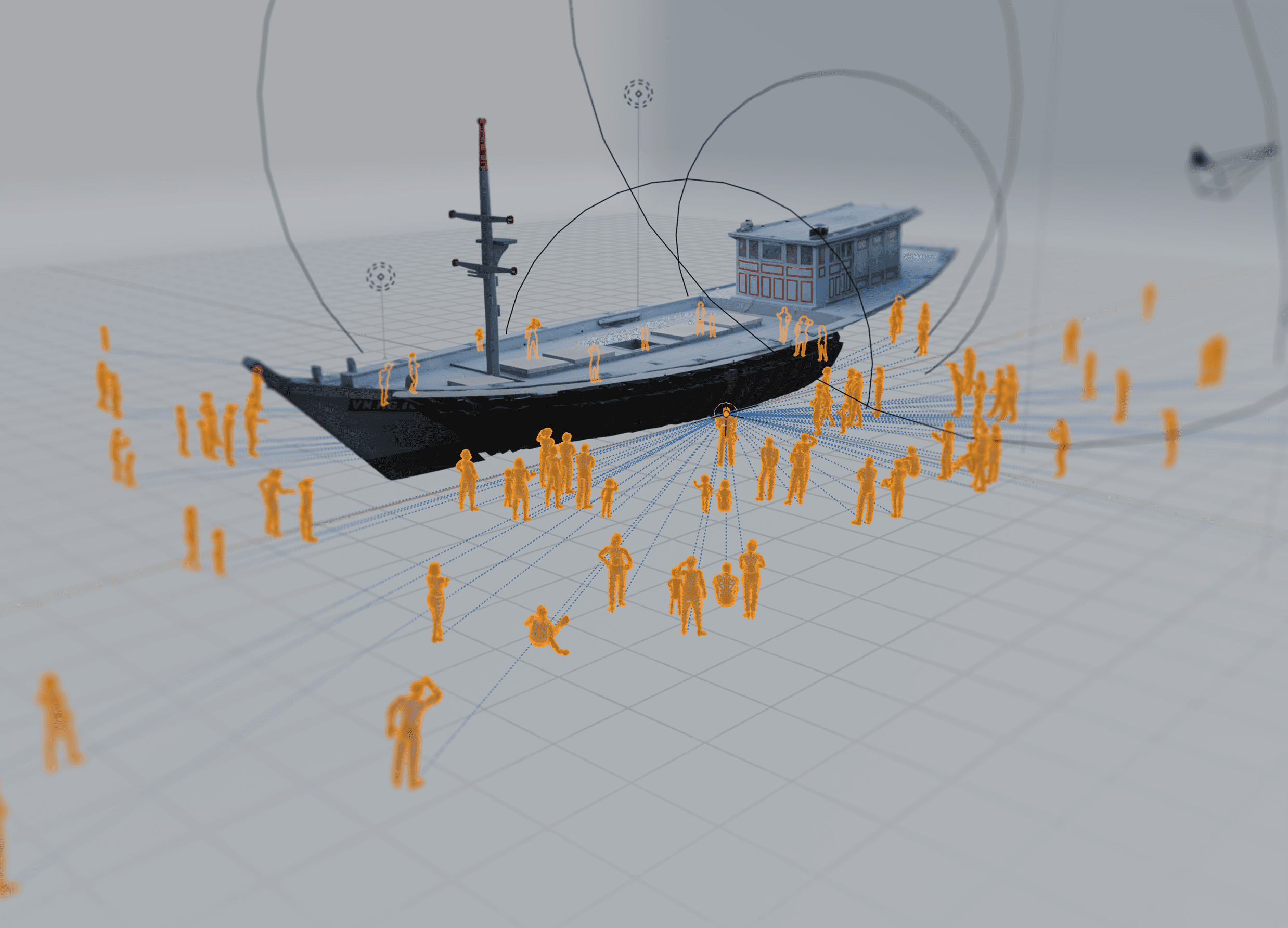
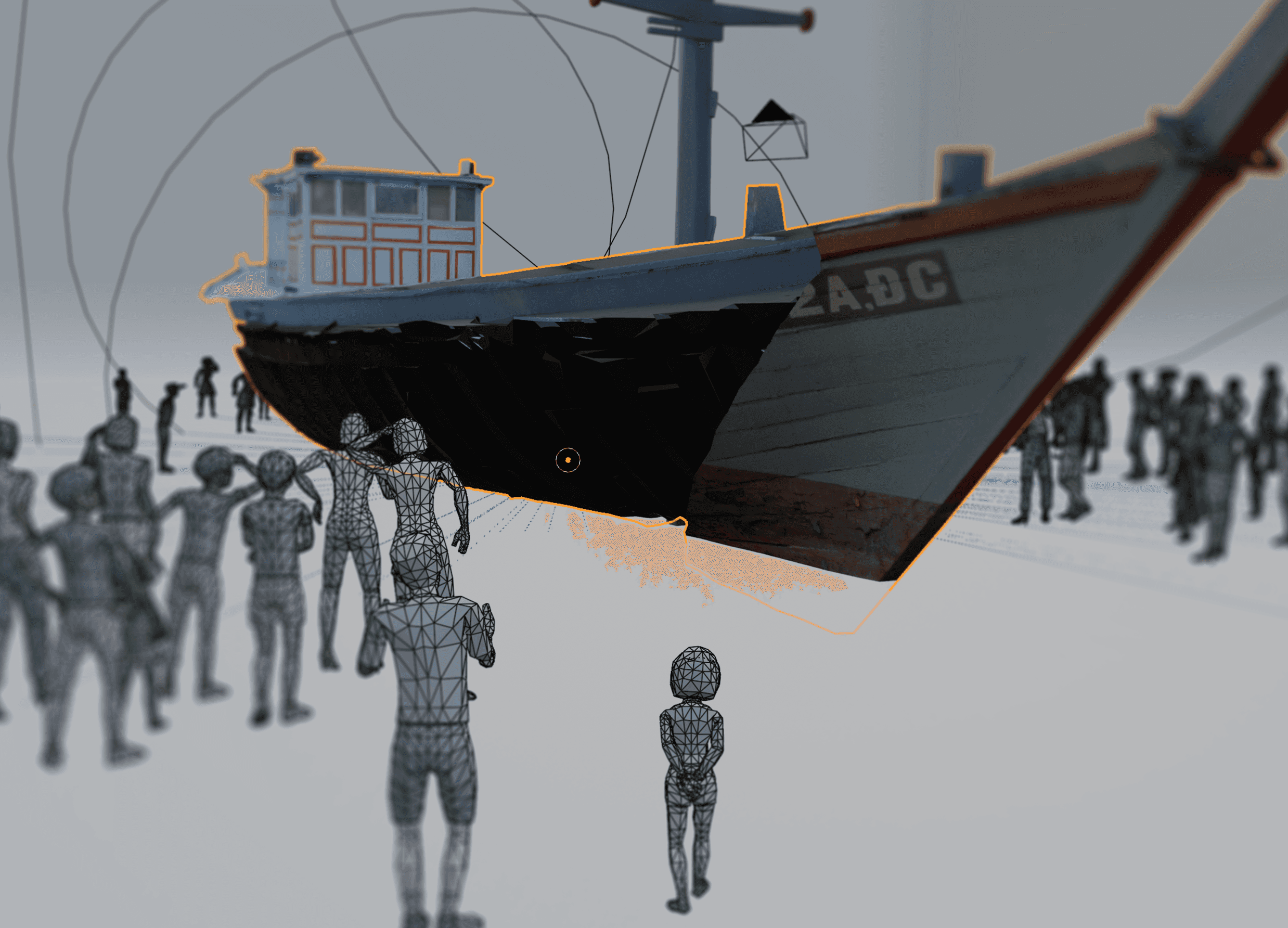
We built a custom visualisation engine in Three.js and React Three Fiber that moves the camera and lighting and reveals each scene in step with the reader’s scroll. The 3D artwork was prepared from CAD and photogrammetry source assets, then optimised for the web.
Texture baking renders lighting and surface detail into image maps ahead of time, and level-of-detail models switch to simpler geometry for parts of the vessel further from the camera. These steps keep each model light enough to load and render in a standard browser. We set up CI and deployment alongside the Museum’s technology teams.
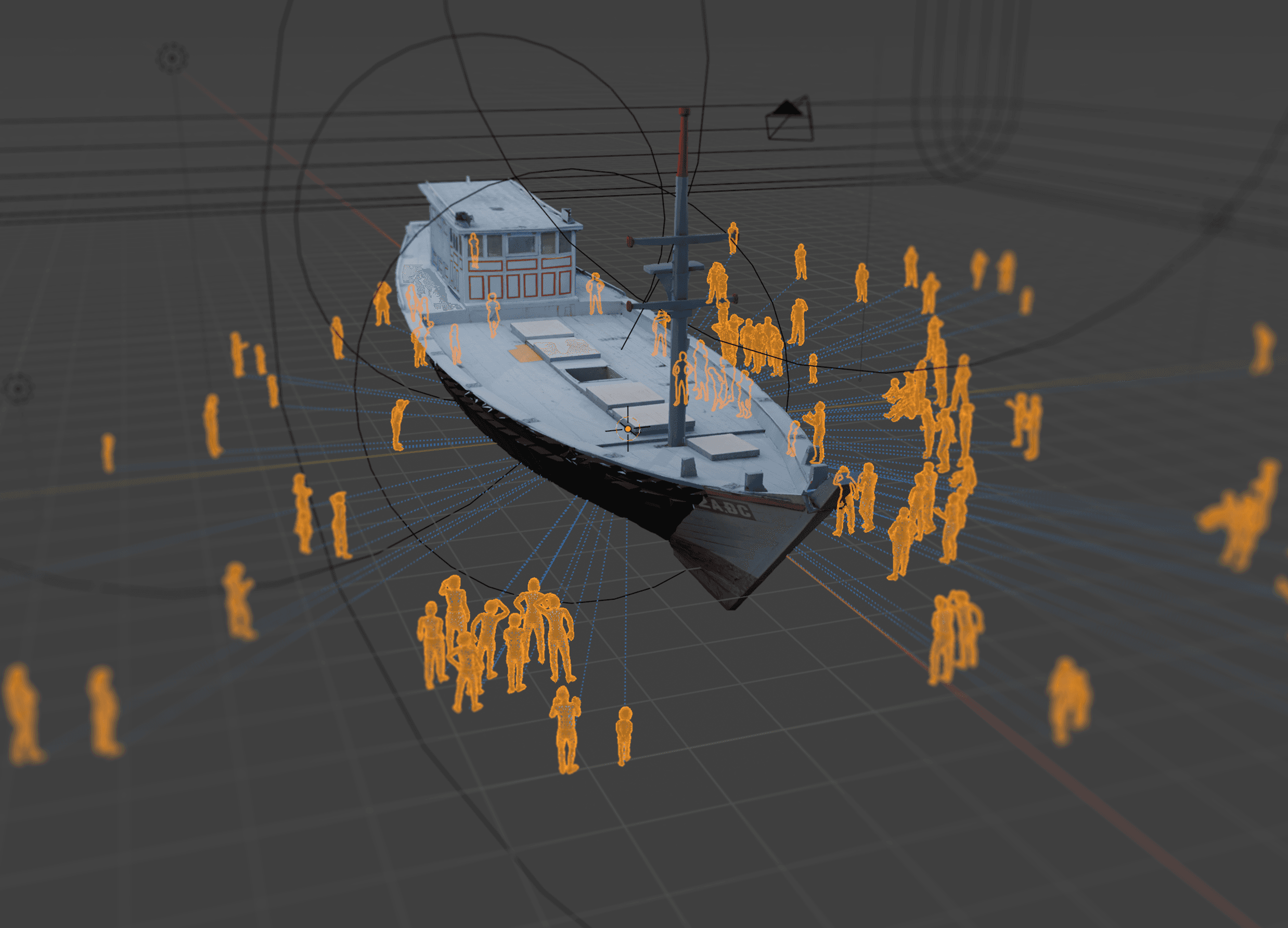
The source models came from the Museum’s 3D visualisation specialists, working across CAD and photogrammetry. We edited, composited and optimised them for real-time rendering in the browser, and wrote custom GLSL shaders to render them. Archival imagery is layered over the 3D, with details on the models matched to the same details in period photographs.
On mobile, the story switches to a portrait layout with text panels over the 3D view. Alongside the responsive page layout, our custom Three.js implementation poses the models at different views across breakpoints.
Results
Readers of the Tự Do story move around the deck, cabin and hull of the boat that brought 31 people from Vietnam to Darwin, alongside Tan Thanh Lu’s own account of the journey. The Barangaroo Boat’s timbers are held separately in conservation, and the story shows them assembled as a hull. Readers can see the vessel as it was built in early colonial Sydney. Model, interface and narrative were designed together as one piece of interpretation, within the Museum’s curatorial, visual and technical requirements.
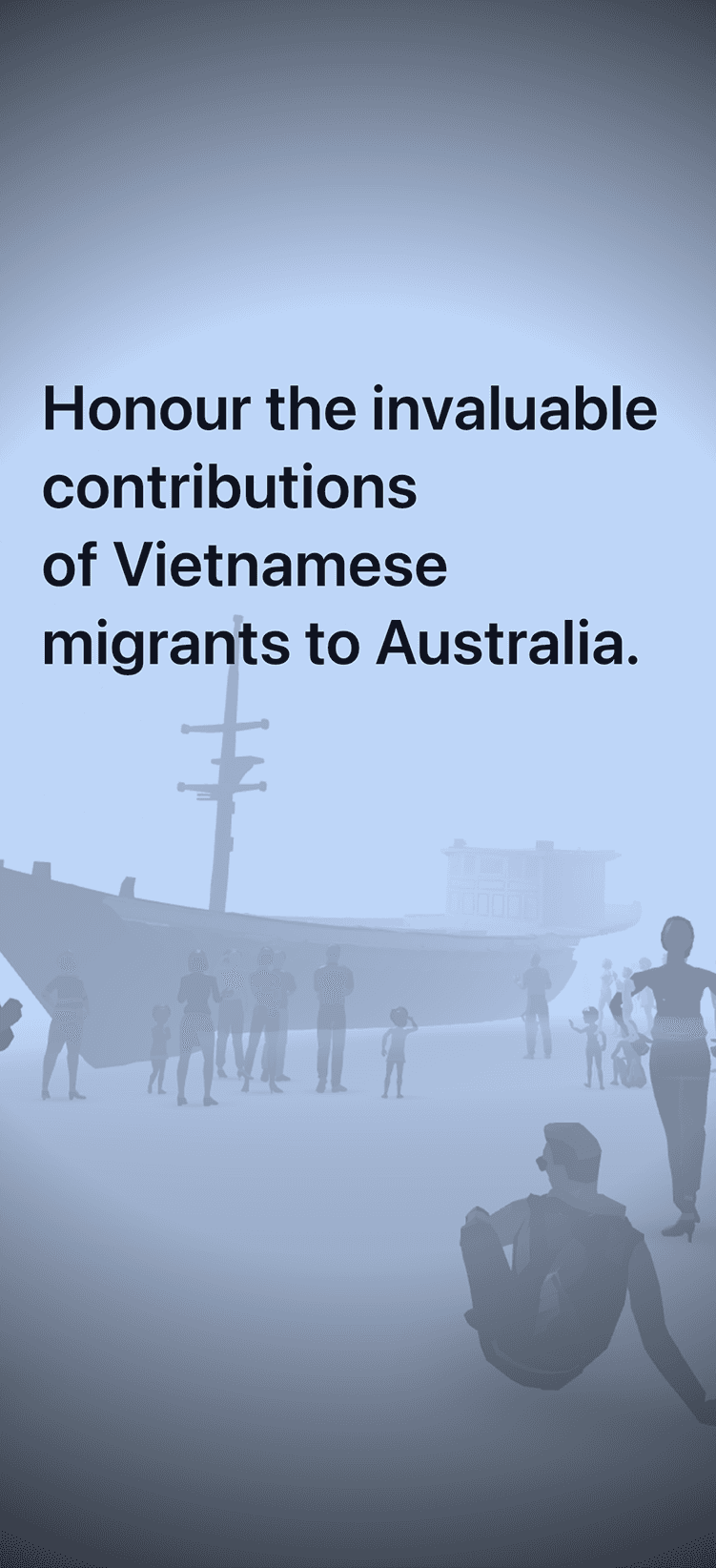
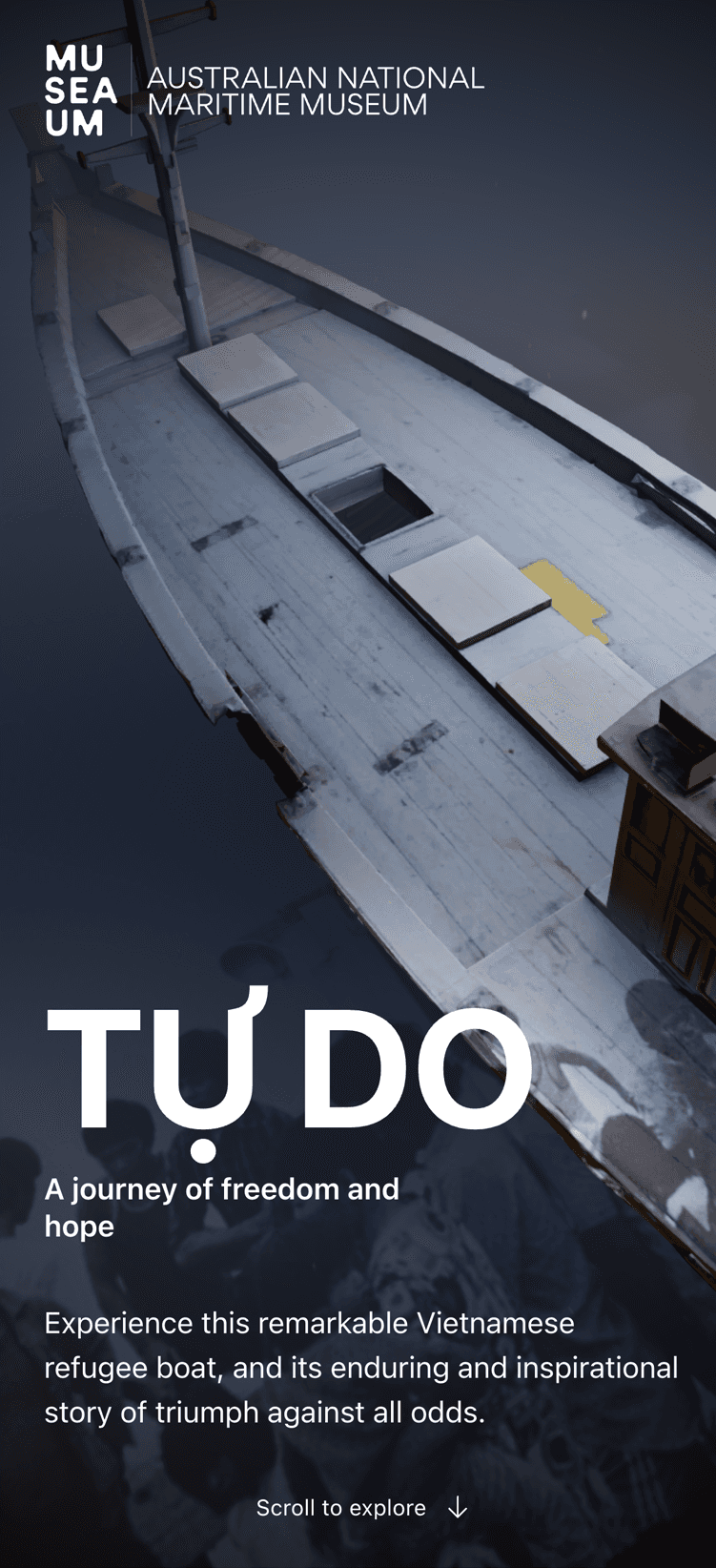
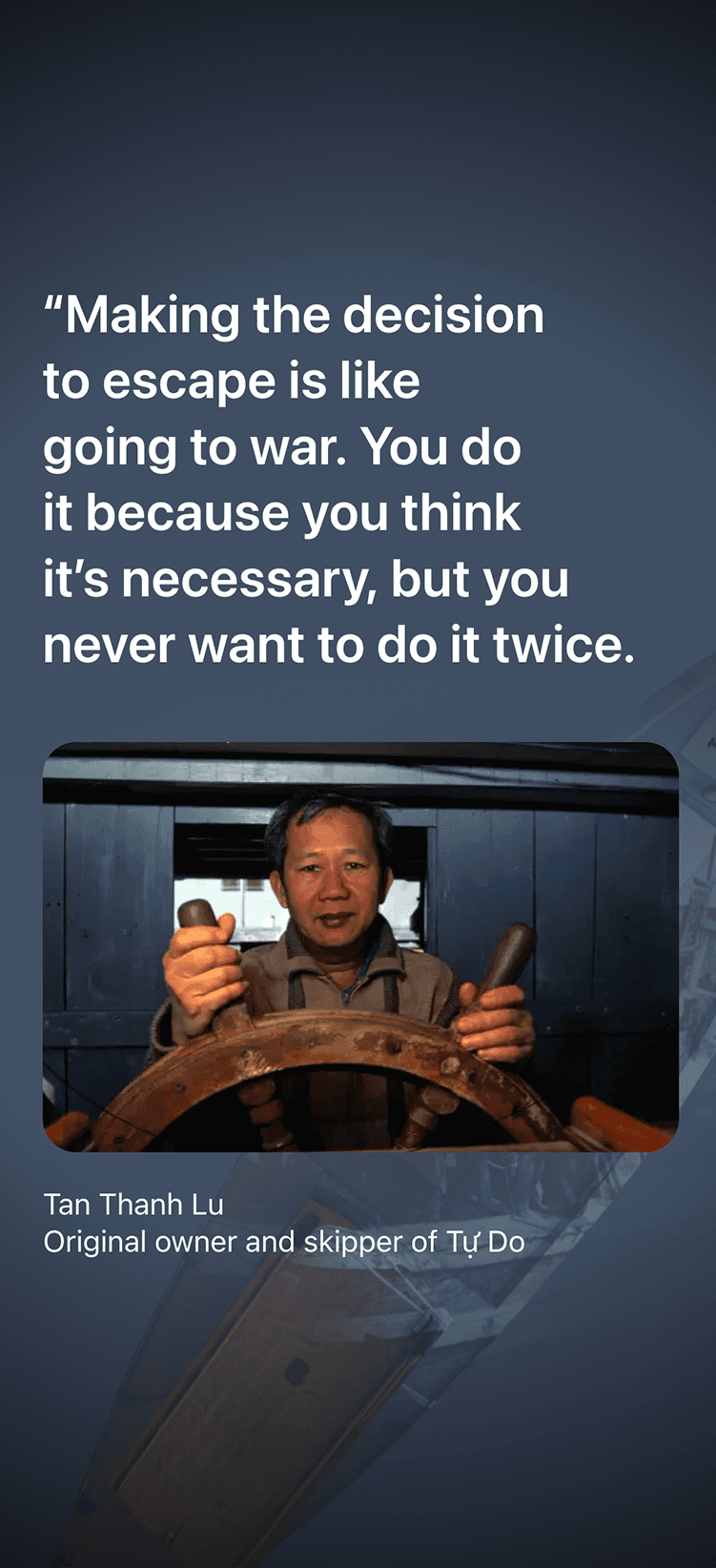
The stories are written as interpretation in their own right, for readers with no background in migration history or maritime archaeology. The Museum currently also uses them in its fundraising. The Barangaroo Boat story is the Museum’s prospectus for the vessel. In May 2026 the NSW Government handed the boat into the National Maritime Collection, and its 294 timbers have been treated to stabilise the wood. The Museum is now seeking support to reconstruct the boat for permanent exhibition. The story shows prospective donors the vessel their support will help rebuild, from the archaeological record through to the finished hull.
Client
- Australian National Maritime Museum
Delivery
- Production
- Creative Direction, Project Management, Editorial Format
- Design
- UX, UI, Graphic Design
- 3D
- Asset Optimisation, Editting, Compositing, Motion Graphics
- Software
- WebGL GLSL, Three JS, GLSL shaders
Other Credits
- Kevin Edwards
- 3D (CAD), Barangaroo Boat
- Michael Rampe, Rampe Realistic Imaging
- 3D (Photogrammetry), Tự Do
- Michael Jensen
- Archival Photography, Tự Do